Tuesday, April 28, 2020

A Mathematics for Teaching Reflection

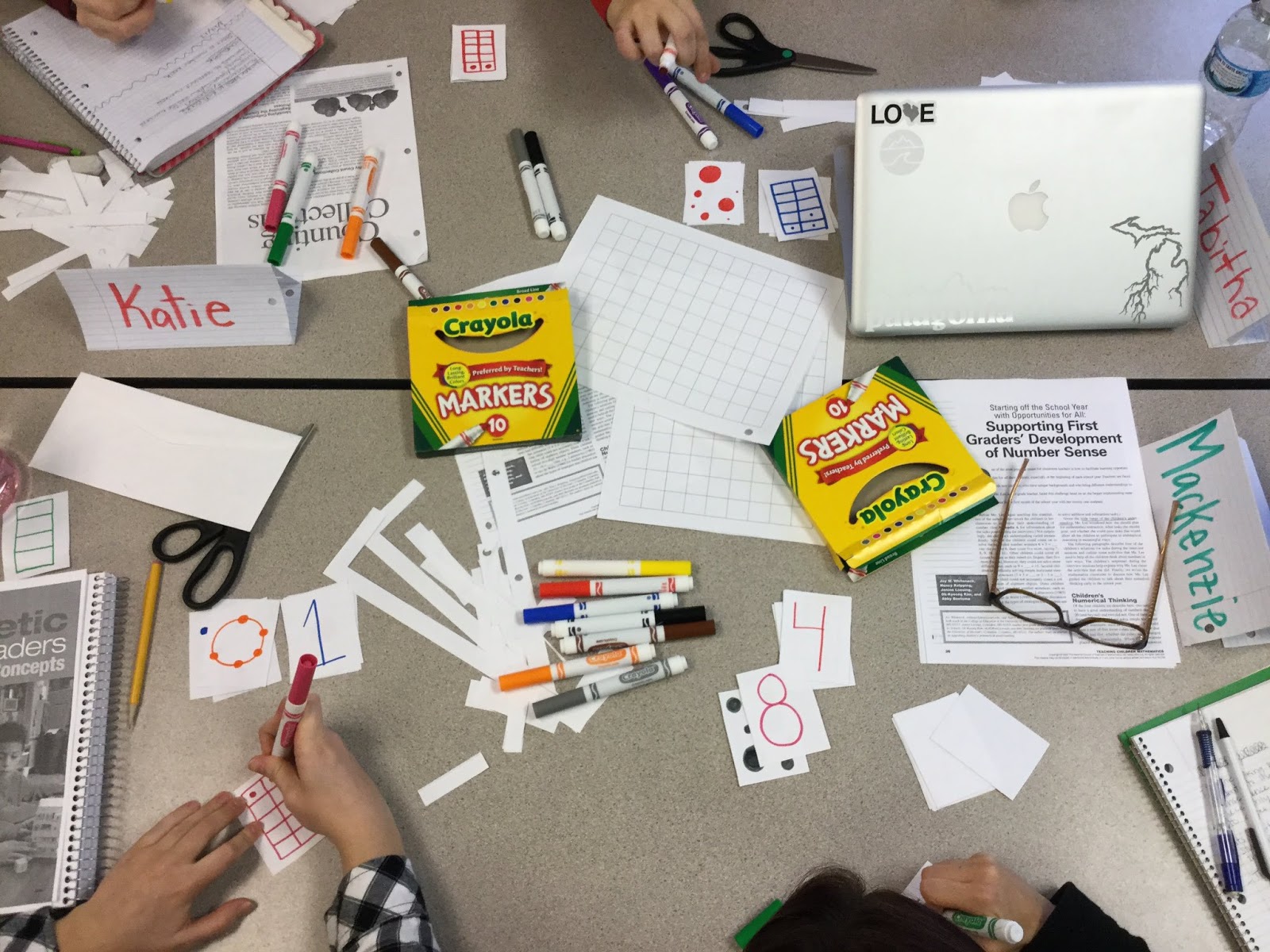
Mediated Field Experience is the term my colleague Esther Billings is using for our preservice elementary math education course that takes place in the schools. The schools have made a classroom open to us, and we teach weekly. What makes it mediated is they use and modify lessons the profs provide, and we observe them and give feedback. When it works out, we also have a student assistant who observes and gives format using a short reflection heuristic. This is a bit of a contrast to many of their school experiences as preservice teachers before their internship, where their time with students is unstructured or less supported. 

This semester both of my sections taught two 3rd grade classes, usually repeating the lesson with their other group. Pairs of college teachers worked with 2 to 4 kids, grouped by the teachers, for 45 min. Before they taught, I did a number talk with the whole class for 10 minutes. (Problem strings, quick images, numberless problems, story problems, etc.) Here's our lessons from this semester.

There is a flipgrid of many of these students talking about their experience, and why they think other students should choose this over the regular college course (which is still an option).

This semester, despite the interruption, I hit on a simple end of semester reflection that surprised me with the connections that these teachers made. I've had trouble giving the principles for effective math teaching much life in an academic setting (or the even harder to communicate high leverage practices). So I thought I would share a representative sample.

I asked: "Read these 8 principles for effective teaching of mathematics. For each, give an example of when you as a teacher did, we as a class did, or read about a teacher doing that principle. (list)" Everything in the bullets is a direct quote from a preservice teacher.

Establish mathematics goals to focus learning

  • As a class, we accomplished this task through the content journals that were assigned throughout the semester. The content journals were focused on content standards which stated clearly the goals of each day we spent together in the class. By explicitly stating the standards in text, the instructional goals were shared with each of us. This not only allowed us to have a clear understanding of what we were going to be learning, but also allowed us to understand the content in a more concise way. We then put this principle to work by using the content journals to determine our understanding of each of the goals. For each of the content journals, we were given the standard that pertained to the classwork and classroom learning we had done and asked to show our understanding of that standard.
  • Everytime my teaching partner and I meant with the students we were working with before we did our warm up activity we would tell them the goals for the day. We never would say by the end of the activity that they should have full understanding or grasp on the topic, but rather we would say such things as, our goal for today’s activity is to think of addition/subtraction, place value, etc. strategies.


Implement tasks that promote reasoning and problem solving

  • As a teacher I have done this multiple times with my lessons. When working with groups of students, not everyone has the same way of getting an answer so I make sure that everyone has a chance to say how he/she solved the problem. If they all have the say way of getting to it I would ask them if they knew another way to solve it or how else they could get the same answer (I would ask this even if they didn’t all take the same path of solving)
  • An example of this is when we created the wordless story problems. We also read about the teacher in Chapter six [Tracy Zager's Becoming the Math Teacher You Wish You'd Had, our text] who gave problems with multiple entry points
  • We did a lot of story problems with one of our groups because we could see their thinking better. A lot of the times they would disagree on what the correct answer was so they would have a discussion with each other for how they got their answer. This helped them show their solution and problem solving through their work.

Use and connect mathematical representations

  • A time I used this as a teacher was when my students and I were doing a number line on a white board, we started at a certain number and I had them added the same number to the prior number, taking turns in a circle. After going around a few times I gave them a number to get to and they had to figure out different ways to solve it. They subtracted the number they ended with from the number I gave them, they added by 10s or 20s until they got close to the given number and figured out the remainder. One of my groups of students even made the connection that adding the number 7 three times is also multiplying 7 by 3. 
  • I saw this principle most while we were learning about teaching fractions as a class. We learned about teaching fractions by making sense instead of just teaching algorithms which don’t strengthen student understanding. We learned to make connections for solving to find if one fraction is smaller than another by seeing how close each fraction is to easier fractions such as ½. There is also an activity where each part of a fraction is a cut up circle, so ⅛ would be shown as a circle cut into 8 equal slices. Then students are able to layer the fractions on top of each other to compare and find out questions such as which is larger. This also helps them see that the larger the denominator, the smaller the individual piece / the smaller the fraction will be.
  • I am brought back to the video that provided an example of representing fractions through a context. Each group of kids were able to come up with their own method of describing how the subs were split up. I remember commenting that there are so many different ways to understand and compute fractions. I find myself struggling to find the best way to solve a problem. I understand the importance of illustrating different ways to solve a problem as a teacher. This allows for students to freely represent their thinking in a way that works with their mindset. And that is what occurred with this particular example.
  • In lesson 8, we focused on practicing multiplication using representations and connections. We played a game where the students drew numbers and made rectangles with the dimensions of those numbers, and multiplied them together to find the area of these. During the game, Joaquin discovered that “multiplication is just like addition” and so I had him explain to the other students why he thought that, using the rectangles as representations. 


Facilitate meaningful mathematical discourse

  • Reading the Becoming book I really liked the story from chapter 13 the teacher Ann’s story with the Powerball. It was exciting to see all of those kids questioning and looking at a whole new view of a question not even the teacher hadn’t thought about before so it brought a lot of meaningful conversation into their classroom even before class was actually started.
  • A specific example of this happened during lesson 7 when we briefly showed our students a picture of a piece of toast with blueberries on it and then they had to tell us how many blueberries were on the toast. We had the students share how many they counted and how they did. They both counted 12, but differently. They talked amongst each other about the ways they had counted, and each acknowledged that both ways were effective, but decided that one's student way was more effective. Count the number of rows and times it by the number of columns.
  • This reminded me of when after we met with our third graders for the day we would share stories about what happened that day. I really think this was helpful because if it was a Tuesday and my group had a rough day with the lesson but another group shared how they had a successful day, I could use their ideas for my lesson on Thursday so it would be more successful. 
  • This is something my partner and I did a lot to keep the students engaged, to build relationships, and to listen for reasoning. During many of our lessons we asked our students to share outloud how they thought about something or their approach to a problem. We encouraged them to share their thinking and to used it as a way to talk about new approaches and different strategies. There was many times that one student answered a problem a different way than another student. We wanted our students to talk to each and learn from each other. Sometimes we can learn the most from our students or from our peers. 


Pose purposeful questions

  • I think our numberless story problems are a great example of this, I had never had experience with them as a student but I love them and when I am a math teacher one day I will definitely use them. The reason I like them so much is because it slowly introduces the idea of the problem and the context of the story before throwing too much at  them by giving them everything all at once. 
  • An example of something I did as a teacher to fulfill this principle was asking the question “how do you know that?”. I had listened to Professor Golden ask us this question in class, so I made an effort to use it when working with the students. This question is simple yet it invites the student to consider their thought process and how they arrived at their understanding. This question is purposeful because not only does it allow the teacher to have a greater understanding of the student’s understanding based on their reasoning, but it also gives the student the opportunity to self-assess and consider their own thought processes and reasoning when learning mathematics and interacting with problems. 
  • Professor Golden's number talks with the children to begin each session with them was a great way to get a routine down with students that help them be able to recognize procedures and ideas about math. The number talks were good ways to emphasize all students' thinking and model and represent the various strategies and thoughts students have on the problem at hand. It is also an inclusion and safe space to talk about wrong or right answers, modeling that mistakes are okay and that struggle to find multiple strategies will come with time.
  • I enjoyed the Notice and Wonder that was encountered in our MTH 222 classroom. From Homework to the discourse we had in class/with our tutees, questions were facilitated in this pattern. It was especially incremental with our Numberless stories! The basic structure of Notice and Wonder follows from ch. 7 of our Becoming Textbook: 
    • Give students an image or scenario without a question. If you like, you can use problems from your curriculum and obscure or delete the question.
    • Ask them, “What do you notice?” (You might want to use think-pair-shares at each step to increase engagement and thoughtfulness.) Record their noticings so students can see them. 
    • Ask students, “What are you wondering?” Record their wonderings.
    • Ask students, “Is there anything up here that you are wondering about? Anything you need clarified?” Pursue any follow-up questions.
    • Once students have had ample time for noticing and wondering, you can either reveal a question you’d like them to solve or have students come up with a question by asking, “If this story were the beginning of a math problem, what could the math problem be?”
  • This reminded me of when after we met with our third graders for the day we would share stories about what happened that day. I really think this was helpful because if it was a Tuesday and my group had a rough day with the lesson but another group shared how they had a successful day, I could use their ideas for my lesson on Thursday so it would be more successful. 

Build procedural fluency from conceptual understanding

  • By picking apart both addition strategies and subtraction strategies, both in class and in the homework in articles and in the book- we learned about a lot of procedures and created fluency in those procedures, from understanding how different methods work and the underlying meanings of the numbers and their many properties. By understanding place value, and the numbers, and groupings and factors of numbers, we are better at understanding and applying those concepts together to understand both the procedures and strategies of, say, addition or subtraction, and develop fluency from correlational learning.
  • This was something I noticed about my own learning. I think I came into the class knowing mathematical procedures for a lot of concepts. I left the class knowing why I do a mathematical procedure here, and how I can use my problem solving skills to build on what I already know. For example, I learned a lot about story problems. I knew how to answer story problems but I didn’t understand how they work and really the differences between them. There are a few different kinds and while they focus on different things they are meant to be used as a mathematical tool. Story problems are designed to make students stop and think about what the question is asking them. They are also used to help students visualize a situation and determine the right approach to it. I used to have the mentality that you should find and pull out the numbers and do something with them like add, subtract, or multiply. I now know to stop, slow down, and think first. 
  • One of my students, ____, had a hard time doing addition. We tried a lot of different techniques and ideas with her, but one class she just decided to try a problem using her own technique and she got the answer correct. She was flexible and once she was able to do it her way, she began to understand the ways that we were presenting to her. 


Support productive struggle in learning mathematics

  • This we used in class and myself as a teacher. This was helpful with the number circle because we were doing this with difficult numbers to see if my students and myself were able to find easier or different ways to find the next number. We supported answers and time to think and did not shout out and point out if the students added or subtracted incorrectly. Figuring out problems in your head and by yourself is more productive in learning new ideas/concepts.
  • This was something I had to learn to do. After Ms. Cordy came and talked to us in class. I got a better understanding on how to do it. A productive struggle is so important in helping a student being able to learn a topic that might be hard for them to grasp, you can't just bail them out with their first answer, or “I don’t know” and move on from the topic, you want to make sure that know what they are talking about, or else you could just move on leaving them behind.
  • We gave our students the problem 123/10 to do, and they were discouraged at first due to the big numbers and division, _____ even said “this is too hard, we can’t do this!”. However, we let the students sit and think for a while, trying out many different strategies and giving encouragement when they seemed stuck on an idea. Eventually, they focused on counting up and down by 10s to find the answer, and were debating whether it is 13 or 12. Hannah and I reminded them there can be a remainder and this helped them decide the answer was 12 with a remainder of 3. They all had tried multiple methods of solving, and Hannah and I encouraged them to keep trying until they figured it out, and they seemed to feel very accomplished after doing so. 
  • A way we supported productive struggle when learning mathematics was by not just giving them the answer when they were wrong. We would ask how they got the answer they got and we would discuss it as a class, hearing ideas from multiple students. We also let everyone know that it is okay to not always get the answer right, and everyone can learn from the mistakes they make including the teachers. We also make mistakes and are learning as we go on, this helped not put so much pressure on them to just “be right” but to actually understand the content they are learning and feel comfortable asking questions. 


Elicit and use evidence of student thinking

  • Throughout the semester I kept a lot of evidence of students thinking through photos as well as notes.  I began writing down student thinking on a white board to help myself understand the student’s thought process.  This proved to be an excellent resource to look back at and analyze.  Oftentimes I learn a lot from the students and they showed me ways of thinking that I would never have thought of.
  • Something I think I developed a lot over the semester was to ask better questions to the students. I wanted them to be able to explain their thoughts to me. I would often ask, “how did you get that?” “why?” “is there another way?” I remember constantly saying, “I want to see your thinking.” That’s where I got a lot of feedback from the students. 
  • The logs we kept on each meeting and observations we made about each individual student helped us pick activities that challenged them appropriately.
  • Hannah and I realized that our students in Mrs. Caterino’s class had a hard time subtracting when the number being subtracted had a larger first digit than the first number (ex 32-18). We decided to change some games from addition to subtraction to help add practice of that, and adjusted them so there were more problems like this so the students could work on doing subtraction problems like that. 
  • Since all of our students were on such a variety of different levels we had to develop our lessons to make sure that everyone would be able to try it and be challenged mathematically. So we’d have follow up questions for our student who would fly through problems and made sure our student who was struggling understood what he was doing mathematically and why.
  • We would evaluate students' work from past weeks and what they were knowledgeable on, and use this student's thinking to tailor our future lessons and make them accessible to all the students.

I was pleased to see connections to our reading, our content time, the number talks they observed, and some progress in their thinking and use of these ideas over the semester. I think the principles became real for them in a way that I haven't seen in traditional teacher prep.

Thursday, December 19, 2019

Playful Math 133


Welcome to the 133rd installment of the Playful Math Carnival.

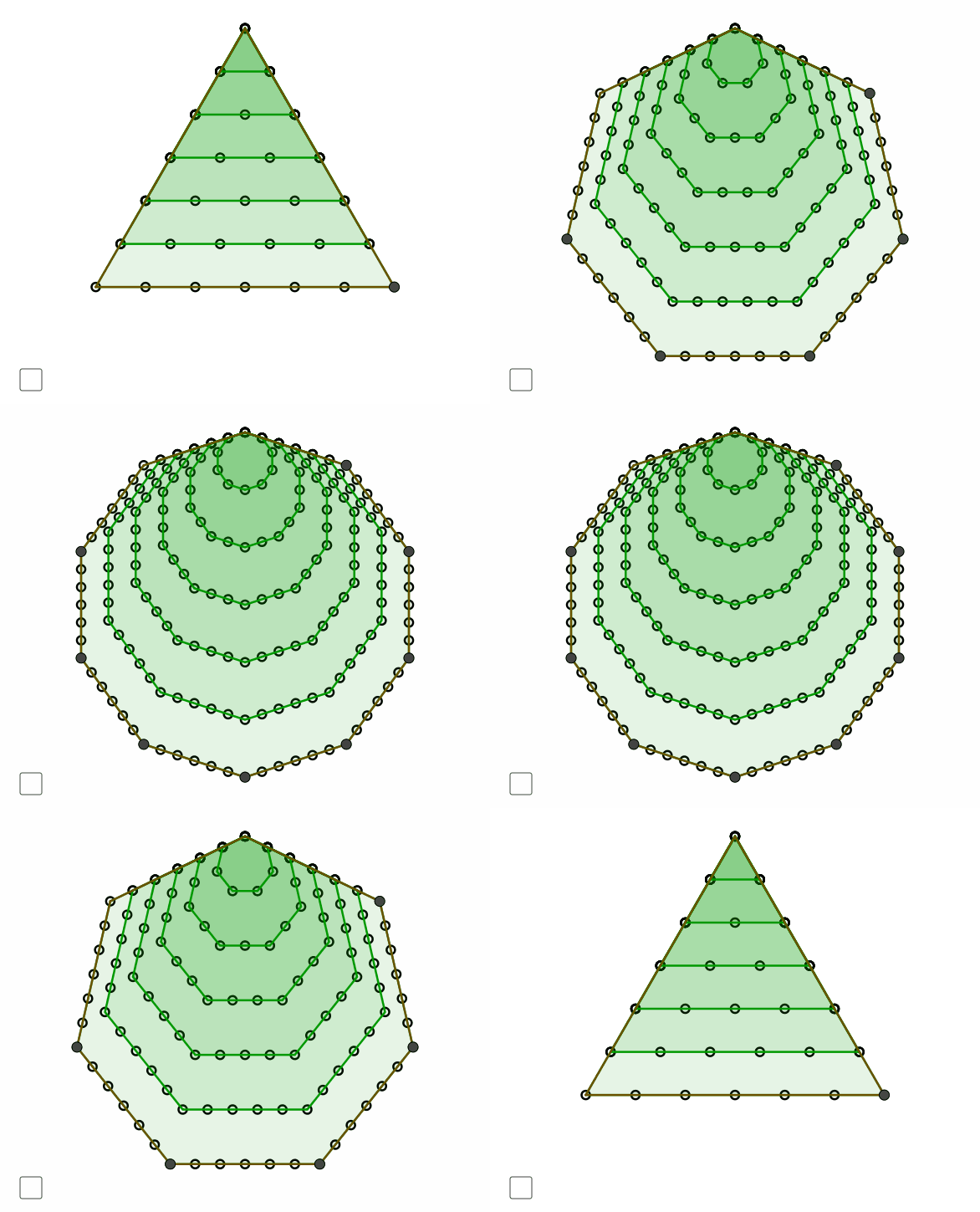
133 is the 6th octagonal number. How many carnivals until the 7th octagonal? What kind of pattern do the 6th polygonal numbers make? (Play with some figural number GeoGebra.)

133 is also semiprime - the product of two prime factors. (Which two?) What is the next semiprime number? 133 is also a Harshad (aka Niven) number, a number divisible by the sum of its digits. It's an unusual stretch where 3 of four consecutive integers are Harshad - which are the other two? There's also a new to me fact: 133 is the number of partitions of 55 into distinct odd parts, which seems equivalent to the number of symmetric Ferrers graphs with 55 nodes. I haven't made sense of this yet, though! 133 is happy in base 10, so a good number for this holiday edition.


Last fact and shout out to Megan Schmidt: 133 is a square spiral corner number! Is that connected to any of the patterns discussed above?
 Literal math playing...

  • Dave Coffey gave a presentation on Math Play with a Purpose at Global Math. He talks about redeeming Bingo, among other things.
  • Speaking of Bingo, two of the groups at this semester's Family Math Nights made actual math games out of a Bingo premise. Meg and Madison made Food Bingo, which makes it about attributes of food. Erica and Claire had Star Bingo which used better number cards and some choice to enhance the game.
  • There was one game that I liked more than the PSTs who ran it! Give Hamburger a try.
  • Probably the breakout and most original game of FMN was You Must Cross the River. Eddie and Climie brought this D&D style game.
  • One of my HS preservice teachers tried to gamify Which One Doesn't Belong... I think Danielle is on to something.
  • Denise Gaskins, the founder of this here blog carnival, shares one of her many Hundred Chart Games.
  • Marilyn Burns shares her two dice sum game, which is a classic for a reason. She shares using it in 2nd and 7th grade!
  • Kent Haines assembled a Holiday Gift Guide for math games that might be too late for shopping this holiday from this post, but you'll want to keep this list.

The 133rd Space Shuttle mission 
was the last (39th) for Discovery. 
They installed the Leonardo Module 
to the International Space Station.

Some playful interactives...

  • NRICH shared a puzzle that is part about area, but made challenging through Cuisenaire Rods. Great lesson.
  • Kevin Forster shared Factris which is a multiplication/factoring version of Tetris. 
  • Scott Farrar made a cool GeoGebra activity implementing Always/Sometimes/Never with quadrilaterals. 

 The C-133 Cargo plane over San Francisco Bay.

Math stories...


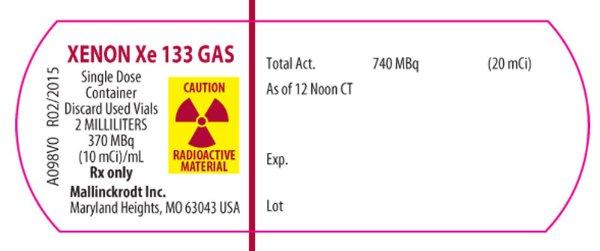
Xenon 133 is an isotope 
that is inhaled to study respiration, 
among other medical imaging uses.

Math art to round us out...

  • Isohedral rounded up some of my favorite animated math artists in this post.
  • Very excited that Clarissa Grandi has a math art activity book coming out.  Look at her website and you'll see why I'm excited.
  • Nathaniel Highstein did an Islamic Geometry project with his students. Scroll down this thread to see their work and how he tiled them!
  • Paula Beardell Krieg has been killing it, but if I was picking one recent post it's this one about the gyrobifastigium. You heard me.
  • Simon Gregg tweeted some mathart that turned into WODB and latin squares and more, as only Simon can do. But what better captures the spirit of Playful Math?

Math art from the Public Domain Review.

The previous Playful Math was at Arithmophobia No More and the next is at Math Misery?. Would you like to host? Contact Denise Gaskins, or see the Playful Math homepage. People don't submit a ton of posts anymore, but I enjoy looking back at what I've found helpful from the math ed community and sharing it all together. So many resources and so much fun to be had.

Happy Holidays, or New Decade Blessings, or Sweet Playful Math!


Anti-Racist

Listening to Ibram X Kendi read his book, How to Be an Anti-Racist, and these are some notes along the way.

The introduction starts out with his humble admission of a speech he shared for a Martin Luther King Jr Day competition/celebration which he now views as racist. This leads into his focusing on the word racist, and how it has become viewed as an attack or a slur instead of a descriptor. Anything that blames a whole group for its problems is or can be racist. The struggle is to both be fully human and to treat others as fully human.

Which I love as basically the central problem of human existence. In a recent Zadie Smith interview, she responded to a question:
"You recently wrote about Toni Morrison that the thwarting of human potential was her great theme. What is yours? My own feeling is that it’s about the failure to be human. Everybody’s born and everybody exists. But to be fully human takes a little bit of effort. I think my novels are about the challenge of actually being human and not avoiding the responsibility of being human, which is very heavy. There’s a responsibility of the single person, the responsibility of the married person and of the person with children, the person without, of the dog lover — each tiny path has its kind of demands upon you, which are incredibly hard to fulfill."
Whew.

Dr. Kendi points out that racist acts or statements are often followed with denial. When we say we're not racist, we're joining in denial and warping the meaning of the term as a descriptor. The distinction is not between racist and not racist, but between racist and anti-racist. Not racist, Dr Kendi points out, is a denial, and racists are the first to deny. So denials are no way to distinguish. Denial is akin to colorblindness, and antiracists aren't ignoring important characteristics of people that have affected their lives. They are seeing the effects and working to counteract racist thought and action. 

Each chapter covers a different specific kind of racism and antiracism. Starts with definitions, tells stories, often personal, sometimes historical, and supports with science and statistics. Then he illustrates the definitions with examples of what a racist and antiracist do or say. It's a robust structure that really supports the book's aim, which is really just the title.

Group vs individuals is a major theme of the book. Racism is the historical most harmful way of grouping individuals that we have manufactured. Dr. Kendi makes clear that every time we think or use 'because they are <fill in race>' we are being racist. To be anti-racist is to break those narratives, to treat people as individuals, to work against the consequences that racism has caused. One of the major shifts in this way of thinking is that black people can be racist if they are engaged in this kind of thinking and action. His motivating example is his own anti-black racism, and he shares anti-white racism from his story as well. Including himself in this analysis is humility and truth speaking in action, and it is powerful. 


In most of the diversity and inclusion learning I have had up until this point, the focus has been on the inequities produced by individual and systemic oppression of non-white (even as that definition has shifted) people. In this view, the minority groups can not be racist because they have no authority or power to oppress. Bias has come to be the identifier for individual racial preference, explicit or implicit.  Dr. Kendi's vision is more powerful to me because it addresses the cause of the oppression and fights against the core of what went wrong as racism was constructed.

Recently, a friend and colleague asked me for resources for anti-racist math education resources and I couldn't really think of any. I made a Google Doc to gather the resources I do now about: http://bit.ly/antiracistmath Please feel free to add or comment. We do have people in the math ed community working toward this and I know I don't know the half of it.

As Dr. Kendi discusses education, he is particularly concerned with the "racial achievement gap". The whole concept is, necessarily, in his framework, a racist idea. To be antiracist is to believe that individuals face greater challenge in schools and each learner is capable of achievement. Here is a blogpost where he details the enraging history of the idea and the tests which maintain it today.

I've taken long enough to write this that Mindshift has a post today about these ideas applied to education.

This book was specifically helpful to me this semester. One of my classes was driving me a little crazy. Pre-service teachers who were not engaged, who didn't listen to instructions, who didn't seem to care even when it involved working with kids. But this book made me realize I was treating them monolithically. I was not treating them as individuals, I was not seeing and encouraging the work of those who were engaged, and I was lowering expectations. I am a spoiled college teacher with low numbers of classes and small class sizes and I was struggling with this most fundamental of my responsibilities. This realization helped me have a better attitude, helped me individualize my thinking towards the learners. 

I love the synergy between this view of antiracism and call to action. It feels of a piece with the call to rehumanize mathematics from Rochelle Gutierrez from Sam Shah's and Hema Khodai's Humanizing Mathematics Conference

Friday, November 8, 2019

Hamburger

Quick math game post. 

My preservice teachers have been working on Family Math Night games, to somewhat mixed effect. ( http://bit.ly/FMN-F19 ) Camille and Jada found a game where you used playing cards to put them in order. As I was thinking about a game for betweenness and number comparison, this popped up whole sale. Though Camille and Jada have not been wowed, I was impressed with some of the thinking I saw.


We're using Tiny Polka Dot cards, but you could play with playing cards, or my preference, number cards the kids make themselves. (Like Paula's awesome cards.)


Start: Each play draws two cards and puts them in low-high order. Whoever has the highest high card goes first. (Tie, highest low card goes first. Both tied... figure it out!)


Play: draw a card. You use it to replace one of your cards, your choice. If it was between them (the hamburger in the bun), you score the replaced card. Otherwise, discard the card.


Winner: first player to five scored cards. (Flexible to adjust length.)


Example: you have a 3 and a 6. The next card you draw is a 7. You could replace the 3 (having 6 & 7) or the 6 (giving you 3 & 7, definitely better for fitting in between.)


Now you have a 3 and a 7 and you draw a 4. Replace the 3 and put it in your score pile, one point. You have a 4 & 7 for your bun.


The homemade or Polka Dot cards give an opportunity to work on cardinality, and comparison is an often overlooked part of number sense. The subtle thing here is deciding which card you replace which works on difference. The catch up mechanic is that scoring a point narrows your window, which makes it harder till you score your next point.


Quick, fun, but I guess not for everyone.


Friday, June 28, 2019

Playful Math 129

From affinitynumerology?
Welcome to the 10000001st (binary) Playful Math Carnival (aka Math Teachers at Play). We often try to start these with some interesting facts about the number, and I was surprised to see many lists of 129 different this or that. Maybe because of the special properties of 129...

It's on the internet, must be true. Regardless, I'm hoping for some good creative, optimistic and inspirational ...ah... vibrations? ... below, so we'll roll with it.

129 is, of course, not prime (3x43, making it semiprime), and I got to wondering which 2 digit primes were and were not prime when you add 100. What's the longest string of primes you could make xx, 1xx, 2xx, ...? 129 is also, fabulously, the sum of the first 10 primes. Which other consecutive sums of the first n primes are prime? Is that common? Why do we only worry about even n?

129 is a Blum integer. People evidently used to think Blum primes were good seed for RSA moduli.

$$129 \to 1^2+2^2+9^2 = 86 \to 8^2+6^2 =100 \to 1^2+0^2+0^2 =1$$
This makes 129 a happy number. (That procedure either leads to 1, happily, or to an 8 number repeating cycle.

The place holder name for the undiscovered element 129 is unbiennium. I'm not sure why I was surprised to find out that there are names for those...


Shakespeare's Sonnet 129 has a bit that makes you think maybe it's mathematical...
Mad in pursuit and in possession so, 
Had, having, and in quest to have, extreme; 
A bliss in proof and proved, a very woe; 
Before, a joy proposed; behind, a dream. 
But it ends, "All this the world well knows; yet none knows well To shun the heaven that leads men to this hell." so I think it was probably another relationship saga.

On to the posts!

129 Antigone is large main-belt asteroid about 114 km in diameter.
Submissions and Shares

Karen Campe jumped in with the perfect starting post. It could have been the carnival post, I think! Summer Math Refreshments has links to online events, chats and includes puzzles.

Manan Shah, who hosted Issue 128, shared a post Summer Excursion #6, which has three playful activities linking words and numbers. See also his Primal Words, a completely new-to-me idea. A little bit crypto. Manan's current challenge is: Give me math words (lower case) except for "integral", "derivative", or "calculus" and I'll give you a score A. Your tasks? (1) Find words with A / word length >= 4 (2) Find A for the three excepted words"

Denise Gaskins, the originator of this here blog carnival, has a free summer service: 8 weeks of fun math activities. All by just an an email sign up. See more at her Playful Math Sampler.

Paula Beardell Krieg is really looking for a math summer. She designed a calculus beach towel, which you can buy, too!

Some of My Recent Favorites

James Propp on Mazes, Puzzles and Proofs. (He also hosted the June Carnival of Mathematics.) His posts are proper essays - always well written and intriguing.

Try the NY Times tile game.

Tina Cardone on crochet patterns.

Mike Lawler's Family Math dug into angles in Zometool polyhedra.

Sarah Carter's latest Naoki Inaba puzzle share. If by some chance you are unfamiliar with Sarah's Monday Must Reads, they are a great sampler of each weeks math twitter and chock full of math play.

Loved this mathy post for Pride Month.

A Lee Sallows Magic Pyramid puzzle.

Chase Orton's address on using play to heal a broken relationship with math.

Graphic essay on a Hilma Af Klimt exhibition. (She's in my #mathart category.)

And I'll throw in my post for World Tessellation Day, which comes every June!

Summer Foxtrot


Professionally Developed

Summer is, of course, when teachers dig deep and retrench and so often engage in self-professional development (when not off in formal PD). Dylan Kane has been doing deep thinking and reflecting on race and teaching. And Wendy Menard recommended this anti-racist reading list at the NY Times. Maybe Marian Small's post on building your mathematical confidence.

Sunil Singh's Math Recess book is having a slowchat this summer.  Can't get more playful than summer recess, right?

'Til 130

The numerology folks also seem to feel 129 is an "angel number," which tells you to look to put your talents to the services of others. Right now, there's no designated host for Carnival 130 - which usually means Denise will make sure it's hosted at her place. But maybe 129 is telling you that you should host? Contact Denise or I to make it happen. Writing these is always fun, and helps you realize how much good stuff teachers and math afficianados are putting out there.

The Hindenberg was airship LZ 129.
ps> So there's this from Archimedes' Lab... Napoleon & Hitler!

  • They were born 129 years apart;
  • They came into power 129 years apart;
  • They declared war on Russia 129 years apart;
  • They were both 129 cm tall;
  • They were defeated 129 years apart!

I only made up one of those.

Monday, June 17, 2019

World Tessellation Day 2019

4th annual World Tessellation Day. Begun in 2016 by Emily Grosvenor for M. C. Escher's birthday. (More of that story and Emily's book.) Don't think I'll get a chance to make a new tessellation for today, but here are some of my favorites from the past year. (Mine followed by the real treats from others.)

Mine:
In Isometric


GeoGebra applet
GeoGebra applet


GeoGebra applet

GeoGebra applet


Others':


Not nearly everything you could see. Do you have a favorite - list it in the comments, please! If you have ideas for a GeoGebra applet, I'd love to hear it. 

To explore further, there's a tessellation page on this blog, or a tag on my tumblr, or GeoGebra books for (mostly) tile altering tessellations and Islamic Geometric Patterns.

And happy WTD. Go cover something with a finite set of shapes and no gaps or overlaps! Might need to work on a better slogan.


Sunday, March 17, 2019

Post Pi

My preservice elementary course this semester is an embedded field experience. Each week I write or find some lesson for the 3rd graders, and they teach in groups of 2 to 3 or 4 3rd graders, and then reteach in our next class period.  Each class I sit in with a group, and everyone has some time to assess and reflect themselves and the learners while I debrief with that group. Before the first time teaching, at least, we try to rehearse together. As a whole, this is how I want to teach teacher prep from here on out. We're getting to less content, but I see so much more learning.

This week I had a lesson planned for Thursday, Pi Day, that had nothing to do with π. It was on these terrific Naoki Inaba place value puzzles that Jenna Laib shared. But with Pi Day approaching, and #MTBOS talk of activities and Scrooges, how could I help but think of a lesson?