Quick math game post.
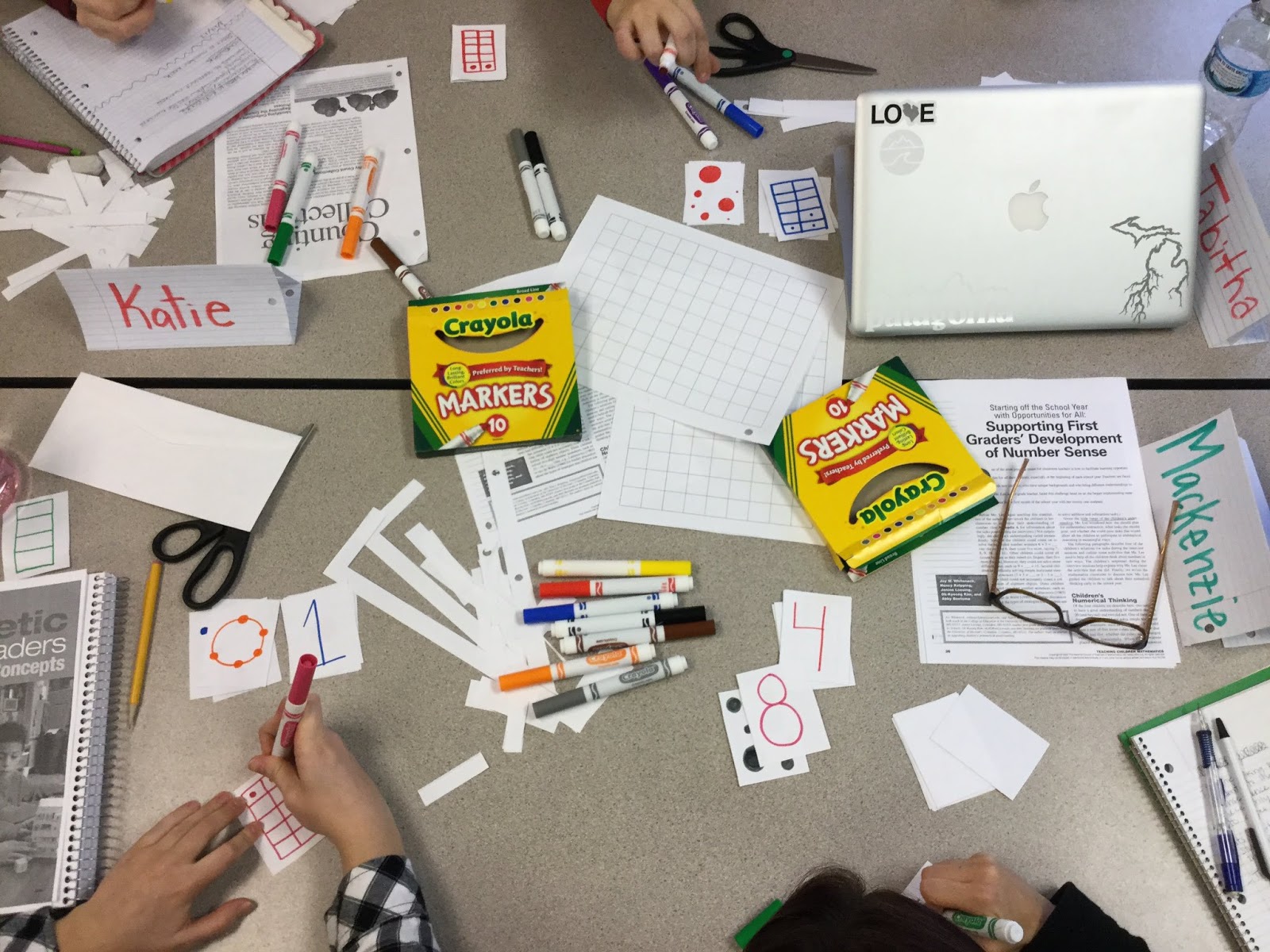
My preservice teachers have been working on Family Math Night games, to somewhat mixed effect. ( http://bit.ly/FMN-F19 ) Camille and Jada found a game where you used playing cards to put them in order. As I was thinking about a game for betweenness and number comparison, this popped up whole sale. Though Camille and Jada have not been wowed, I was impressed with some of the thinking I saw.
We're using Tiny Polka Dot cards, but you could play with playing cards, or my preference, number cards the kids make themselves. (Like Paula's awesome cards.)
Start: Each play draws two cards and puts them in low-high order. Whoever has the highest high card goes first. (Tie, highest low card goes first. Both tied... figure it out!)
Play: draw a card. You use it to replace one of your cards, your choice. If it was between them (the hamburger in the bun), you score the replaced card. Otherwise, discard the card.
Winner: first player to five scored cards. (Flexible to adjust length.)
Example: you have a 3 and a 6. The next card you draw is a 7. You could replace the 3 (having 6 & 7) or the 6 (giving you 3 & 7, definitely better for fitting in between.)
Now you have a 3 and a 7 and you draw a 4. Replace the 3 and put it in your score pile, one point. You have a 4 & 7 for your bun.
The homemade or Polka Dot cards give an opportunity to work on cardinality, and comparison is an often overlooked part of number sense. The subtle thing here is deciding which card you replace which works on difference. The catch up mechanic is that scoring a point narrows your window, which makes it harder till you score your next point.
Quick, fun, but I guess not for everyone.
Showing posts with label number sense. Show all posts
Friday, November 8, 2019
Monday, July 24, 2017
Same Game, Different Grade
I love working with people. Given the choice of math together or apart, or teaching together or apart, I would pretty much always take together.
So I was thrilled when Joe Schwartz was willing to work with me for Twitter Math Camp this year. Among many shared math interests, we both love math games. I've learned a lot from Joe's math game posts, and his Twitter Math Camp 16 presentation on them blew my mind. Such great learning potential the way he approaches games with students.
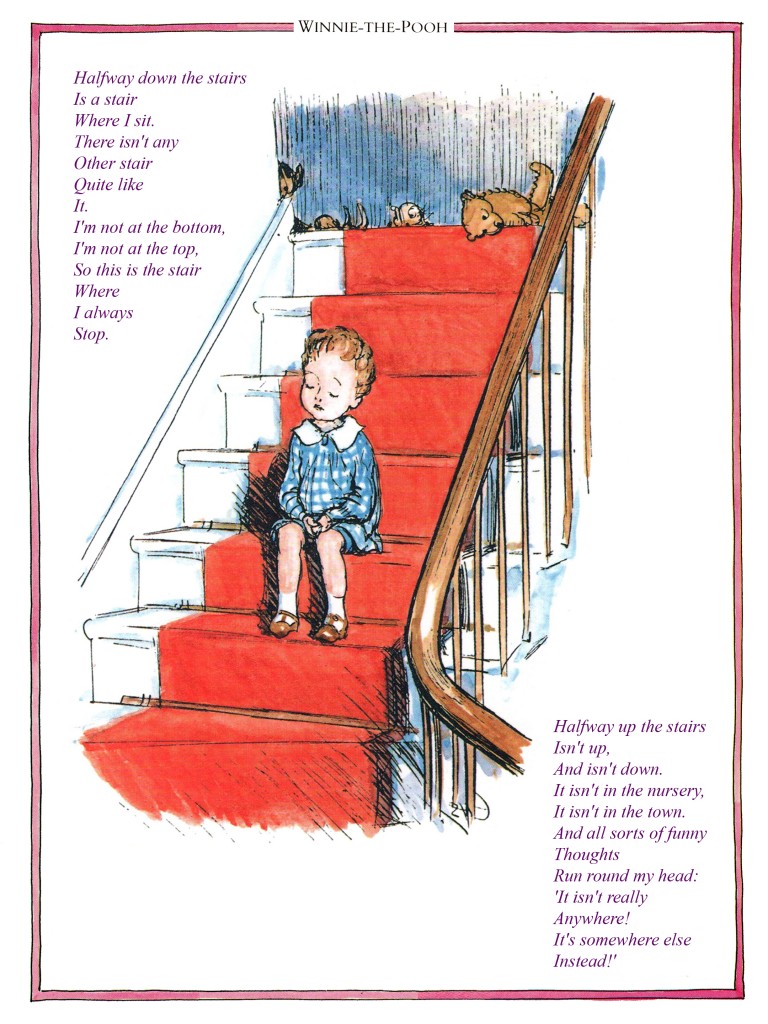
One game with which we had both already done things was Fill the Stairs, which has been around for a while in many variations. I had done a version with Esther Billings and David Coffey in an inservice, that involved having cut up bags of numbers. Joe had done a version with digit cards 0 to 9 where students fill in a staircase with 10 on the bottom stair
and 100 on the top stair. Joe and I had connected on a version I came up with earlier called Decimal Pickle. As we talked about it, the spirit of Tracy Zager began again. She's been haunting me all year from her TMC16 keynote, where she challenged us to do cross-grade collaboration. "What if we did variations of the game across grades?" Joe wondered. So we were in.
Necessary references: Joe's first post about it, and the redux.
The idea for Decimal Pickle came from a need for comparing decimal numbers of different length. Why would we flip different numbers of cards? The colors are pretty intuitive there. Black? Flip again! It added a lot of excitement to the game, almost a black jack feel. For the mathematics, it was perfect for the 5th graders to compare tenths, hundredths and thousandths.
Talking with Joe got me thinking about the big topic. How does order show up across the grades? When I think about number sense, I see a few components. First, number as quantity. Or the numbers in context. But second only to that is comparison. Well, second is representation. But third only to those two is comparison. And comparison before computation, which is right out. But this idea of order is really an up and down the curriculum issue. As numbers grow more complex, how to order them is very relevant. It's the experiential aspect of number that we often ignore as we get farther up the curriculum. One of the strengths of this game is that it requires comparing more than two numbers. I think ordering a set is more complex and challenging task. There may be a component of number sense I haven't thought about at play, a kind of sense of distribution.
I like games to use easily accessible materials, so playing cards are great. I often use J as 0. (And if the kids are old enough, "You know what you have if you've got Jack?") I'm not sure why I first tried having students make their own gameboard, but I love it, now. There are students for whom that's their in for the game. (Deep game design - there's probably a whole player psychographic aspect to this.)
The first step for me on this generalize the game journey was to fit it for 3rd graders. I wanted single digit and 2 digit (teachers asked for no three digit), but thought that half and half was a weird balance. I settled on turn over a card. On a diamond you stop, otherwise turn over another.
Kids are not as familiar with playing cards as they used to be, so we started with something halfway between notice and wonder and Which One Doesn't Belong. Then, as I often introduce games, I played vs the entire class. Then they break up and play in 2 vs 2 teams. One of Joe's great ideas was to have students make a number line with their results. Great task, ripe for discussion, strong in representation, awesome assessment.

Thinking about how to go even younger, I was thinking about sorting single digit cards. But how to make a game out of it? First came the first grade variation. Fill five spaces. Flip cards like War to start in the the middle space. Higher goes first (advantage) but their card is probably too big for the middle space (disadvantage). Every flip you place in a spot. If it's the same as a card you have, cover that card. Cards have to stay in order. So if you have 3 __ 4 6 __ __ and you turn over a 5, you can cover the 4 or the 6, but not the blank between 3 & 4.
That requirement to not move cards was too much for Kindergarten, so they could move their cards around. That generated plenty of discussion, too.
Thinking about how to extend the game past high school was a challenge. I kept thinking about order of operations. One of my pet peeves is PEMDAS, as I want students to think about 4 levels, grouping - exponents - multiplication/division - addiition/subtraction. (GEMS if we need an acronym.) So I thought about doing the red/black for more cards. 2 cards minimum, you can add or subtract. Three cards, have to join with add/subtract and multiply/divide. Four cards, have to do an exponent or root. Five cards you have to use a grouping structure, parentheses, radical, fraction bar. I think this could work, but haven't got a chance to test it yet. The class in which I was going to get to test was a college algebra class working on exponents, so this became the variation.
It was great. The students were constantly surprised by their results, got a lot out of comparing these extreme numbers, and became more efficient at arranging the numbers to get the effect they wanted even in the course of an hour playing the game. Older students also need these play experiences, I think they just abstract from them more quickly than younger students.
We'll be talking about this at Twitter Math Camp 17, so I hope you can join us if you're there. Here's a page with downloads and resources: http://bit.ly/stairs-tmc17, regardless. If you have ideas for more variations or get to try one of these, let me know!
What games do you use that connect to a big idea in math?
So I was thrilled when Joe Schwartz was willing to work with me for Twitter Math Camp this year. Among many shared math interests, we both love math games. I've learned a lot from Joe's math game posts, and his Twitter Math Camp 16 presentation on them blew my mind. Such great learning potential the way he approaches games with students.
![]() |
| E.H. Shephard illustrating A.A. Milne |
and 100 on the top stair. Joe and I had connected on a version I came up with earlier called Decimal Pickle. As we talked about it, the spirit of Tracy Zager began again. She's been haunting me all year from her TMC16 keynote, where she challenged us to do cross-grade collaboration. "What if we did variations of the game across grades?" Joe wondered. So we were in.
Necessary references: Joe's first post about it, and the redux.
The idea for Decimal Pickle came from a need for comparing decimal numbers of different length. Why would we flip different numbers of cards? The colors are pretty intuitive there. Black? Flip again! It added a lot of excitement to the game, almost a black jack feel. For the mathematics, it was perfect for the 5th graders to compare tenths, hundredths and thousandths.
Talking with Joe got me thinking about the big topic. How does order show up across the grades? When I think about number sense, I see a few components. First, number as quantity. Or the numbers in context. But second only to that is comparison. Well, second is representation. But third only to those two is comparison. And comparison before computation, which is right out. But this idea of order is really an up and down the curriculum issue. As numbers grow more complex, how to order them is very relevant. It's the experiential aspect of number that we often ignore as we get farther up the curriculum. One of the strengths of this game is that it requires comparing more than two numbers. I think ordering a set is more complex and challenging task. There may be a component of number sense I haven't thought about at play, a kind of sense of distribution.
I like games to use easily accessible materials, so playing cards are great. I often use J as 0. (And if the kids are old enough, "You know what you have if you've got Jack?") I'm not sure why I first tried having students make their own gameboard, but I love it, now. There are students for whom that's their in for the game. (Deep game design - there's probably a whole player psychographic aspect to this.)
The first step for me on this generalize the game journey was to fit it for 3rd graders. I wanted single digit and 2 digit (teachers asked for no three digit), but thought that half and half was a weird balance. I settled on turn over a card. On a diamond you stop, otherwise turn over another.
Kids are not as familiar with playing cards as they used to be, so we started with something halfway between notice and wonder and Which One Doesn't Belong. Then, as I often introduce games, I played vs the entire class. Then they break up and play in 2 vs 2 teams. One of Joe's great ideas was to have students make a number line with their results. Great task, ripe for discussion, strong in representation, awesome assessment.

Thinking about how to go even younger, I was thinking about sorting single digit cards. But how to make a game out of it? First came the first grade variation. Fill five spaces. Flip cards like War to start in the the middle space. Higher goes first (advantage) but their card is probably too big for the middle space (disadvantage). Every flip you place in a spot. If it's the same as a card you have, cover that card. Cards have to stay in order. So if you have 3 __ 4 6 __ __ and you turn over a 5, you can cover the 4 or the 6, but not the blank between 3 & 4.
That requirement to not move cards was too much for Kindergarten, so they could move their cards around. That generated plenty of discussion, too.
Thinking about how to extend the game past high school was a challenge. I kept thinking about order of operations. One of my pet peeves is PEMDAS, as I want students to think about 4 levels, grouping - exponents - multiplication/division - addiition/subtraction. (GEMS if we need an acronym.) So I thought about doing the red/black for more cards. 2 cards minimum, you can add or subtract. Three cards, have to join with add/subtract and multiply/divide. Four cards, have to do an exponent or root. Five cards you have to use a grouping structure, parentheses, radical, fraction bar. I think this could work, but haven't got a chance to test it yet. The class in which I was going to get to test was a college algebra class working on exponents, so this became the variation.
![]() |
| Marcel Duchamp |
We'll be talking about this at Twitter Math Camp 17, so I hope you can join us if you're there. Here's a page with downloads and resources: http://bit.ly/stairs-tmc17, regardless. If you have ideas for more variations or get to try one of these, let me know!
What games do you use that connect to a big idea in math?
Labels:
game,
game design,
Joe Schwartz,
number sense,
order
Thursday, May 5, 2016
Guess Again
Graham Fletcher was tweeting from a Marian Small presentation this morning.I think the theme was number sense activities. These line questions caught my interest so I wanted to make a GeoGebra version. This post is about how I made it. I'm always torn about these things because so much of the good math is in making them, but I'm mostly making them for students. But learning how to make in GeoGebra is often not something that is engaging to a majority of them...
If you want to try it first, it's on GeoGebraTube.


First thought: Pick a random value - maybe 1 to 100? - and a smaller value, then have students guess a higher value. (Basically Marian's second photo.) Should it just be multiples of 5? I liked the idea of multiples, so I randomly pick a scale from 1 to 5, then pick a value 1 to 30 for a central value. Pick a number lower and higher, and the setup is done.
Steve Phelps was playing with GeoGebra color the other day, so I added the unnecessary frill of different colors, but it makes it a little cooler to me. Replaying it, I realized it would definitely be better if different points were unknown, so the sketch randomly selects the low, medium or high point for guessing.
A GeoGebra fine point. If you have the values randomly determined directly, then anything that makes the sketch recompute changes the value. So I have variables set randomly, but just assign those values to game values when the New button is pressed using the SetValue command. The guesses count also uses the SetValue command: SetValue[numguess, numguess+1] everytime the guess value changes.
Then it's just bells & whistles using the condition to show object on the Advance tab. A random element of {1,2,3} is picked to hide a value, which shows if guess == value. Some different text
The "Within..." is probably the sketchiest part. I want some further information, but not perfect, so it randomly assigns a number up to two times how far away you are.There's a bit of oddness from uploading to GeoGebraTube in terms of scaling, so I had to ask users to hit the button to start. There's a command GGBOnInit that might solve this, but I don't know how to use this yet.
Pretty fun to make, and reasonably fun to play. I don't have students to play it with at the moment, so if you get a chance, let me know how it goes.
And - as always - if you have something you'd like to see made, drop me a line!
Friday, February 24, 2012
Mathzee
Had just a quick time with the elementary students today. On short notice, I needed a game suitable for 3rd to 5th graders. This obviously isn't super-original, but a spin on the fabulous Yahtzee.
The game was popular with the kids ("5 dice?!") and many had played Yahtzee so there was not a lot of explaining necessary. I wanted to experiment with 2 rolls instead of 3 rolls.
To introduce the game, I talked about how mathematicians like to notice. We rolled five dice and talked about what they noticed. The scoring rolls were chosen to provide more relationships to notice as well as some computation practice. The dice pips are a good support to the third graders who were novices at the multiplication, and the 5th graders were really seriously considering which scoring slots were related to what they had rolled. One team of girls played cooperatively instead of competitively, and that worked well.
I think the game has some replay value - due to the brilliance of the Yahtzee designers. Dice randomness plus getting better with more familiarity with the scoring is good for repeat business. The math is reasonable for looking for and increasing automaticity with computation. Let me know what works for you and what variations you might try if you give it a go.
The game was popular with the kids ("5 dice?!") and many had played Yahtzee so there was not a lot of explaining necessary. I wanted to experiment with 2 rolls instead of 3 rolls.
To introduce the game, I talked about how mathematicians like to notice. We rolled five dice and talked about what they noticed. The scoring rolls were chosen to provide more relationships to notice as well as some computation practice. The dice pips are a good support to the third graders who were novices at the multiplication, and the 5th graders were really seriously considering which scoring slots were related to what they had rolled. One team of girls played cooperatively instead of competitively, and that worked well.
| God bless you, Professor Yaht! image Josh Kenzer @ Flickr |
I think the game has some replay value - due to the brilliance of the Yahtzee designers. Dice randomness plus getting better with more familiarity with the scoring is good for repeat business. The math is reasonable for looking for and increasing automaticity with computation. Let me know what works for you and what variations you might try if you give it a go.
Saturday, January 28, 2012
Fraction Catch
Sometimes it surprises me what I haven't written about here. Fraction Catch is one of my favorite games and it's been pretty successful in implementation from third grade to ninth grade. Partly the game, and partly the fraction cards.
I'm quite happy with the rectangle representation for the cards, as I have seen younger students use it a lot to do reasoning, and get a better sense of what the fraction is.
I often think of number sense having several parts:
It's very possible that the last two bullets are not actually part of understanding the number, so much as they are activities that deepen the first two characteristics, but I don't see the point in distinguishing them.
The game is very simple. Each player has a hand of three cards, plays a fraction onto the line of cards arranged least to greatest, and captures the lower adjacent card if they were able to play in between. Here's the rules and an example:
Playing this week with Mr. Schiller's class, I thought maybe this would be a chance to focus on the rules aspect of a game. I asked what might make the rules for a game good, or understandable, and they had no idea. It took a bit of rephrasing just to get across my question. I got the sense that I was not starting at the beginning, and switched tacks. Instead of demonstrating it first, I asked them to read the rules and then tell Mr. Schiller and I how to play.
It was challenging. Not very engaging, switch from the normal routine, and really communicated to me that I have to or maybe just should do some equipping to get them to be independent game players before working on teaching them designing. The class leaders got the idea, and taught the game to us and the rest of class. Mr. Schiller trounced me which they very much enjoyed. It was the terrible draws, I'm telling you.
Actually playing the game, though, students played pretty intently, though playing a couple games was enough for some. One interesting thing was what they went on to play. We suggested war or high-low-war for some, but one group used the cards to play their own version of Flower Power, a rational number ordering game from MangaHigh. (A lot of my favorite free computer math games are there; teachers register students and can track their progress.) Another group just wanted to put all the cards in order to make as long a streak as possible. Then they were noticing patterns about which cards were in the set and which weren't.
After the game, there was one good suggestion for a new rule: if you have two no-play turns in a row, you can swap in your whole hand for a new one.
Students made lots of good connections with the representations, and used them to compare fractions. Not too many got to the point where they were developing a strategy on where to play, but far enough that they would choose scoring plays over easy plays.
To summarize I put up some of the comparisons I had seen. All the students did well on comparing like denominators, like 3/8 and 5/8. They also were mostly solid on comparing like numerators, like 2/5 and 2/3. We talked for a bit about 2/3 and 3/4, and they used the nice strategy of how far from a unit they were, but the class couldn't figure out together how 7/10 compared to those two. Mr. Schiller let them know they'd keep the cards so they could play again later. He was impressed how well they played even though they had covered little of this in class beforehand.
Game Evaluation:
I'm quite happy with the rectangle representation for the cards, as I have seen younger students use it a lot to do reasoning, and get a better sense of what the fraction is.
I often think of number sense having several parts:
- understanding the number as a quantity
- being able to flexibly represent the number
- being able to compare two or more numbers
- being able to compose and decompose the number flexibly
It's very possible that the last two bullets are not actually part of understanding the number, so much as they are activities that deepen the first two characteristics, but I don't see the point in distinguishing them.
The game is very simple. Each player has a hand of three cards, plays a fraction onto the line of cards arranged least to greatest, and captures the lower adjacent card if they were able to play in between. Here's the rules and an example:
Playing this week with Mr. Schiller's class, I thought maybe this would be a chance to focus on the rules aspect of a game. I asked what might make the rules for a game good, or understandable, and they had no idea. It took a bit of rephrasing just to get across my question. I got the sense that I was not starting at the beginning, and switched tacks. Instead of demonstrating it first, I asked them to read the rules and then tell Mr. Schiller and I how to play.
It was challenging. Not very engaging, switch from the normal routine, and really communicated to me that I have to or maybe just should do some equipping to get them to be independent game players before working on teaching them designing. The class leaders got the idea, and taught the game to us and the rest of class. Mr. Schiller trounced me which they very much enjoyed. It was the terrible draws, I'm telling you.
Actually playing the game, though, students played pretty intently, though playing a couple games was enough for some. One interesting thing was what they went on to play. We suggested war or high-low-war for some, but one group used the cards to play their own version of Flower Power, a rational number ordering game from MangaHigh. (A lot of my favorite free computer math games are there; teachers register students and can track their progress.) Another group just wanted to put all the cards in order to make as long a streak as possible. Then they were noticing patterns about which cards were in the set and which weren't.After the game, there was one good suggestion for a new rule: if you have two no-play turns in a row, you can swap in your whole hand for a new one.
Students made lots of good connections with the representations, and used them to compare fractions. Not too many got to the point where they were developing a strategy on where to play, but far enough that they would choose scoring plays over easy plays.
To summarize I put up some of the comparisons I had seen. All the students did well on comparing like denominators, like 3/8 and 5/8. They also were mostly solid on comparing like numerators, like 2/5 and 2/3. We talked for a bit about 2/3 and 3/4, and they used the nice strategy of how far from a unit they were, but the class couldn't figure out together how 7/10 compared to those two. Mr. Schiller let them know they'd keep the cards so they could play again later. He was impressed how well they played even though they had covered little of this in class beforehand.
Game Evaluation:
- Goal(s) -spot on. Really addresses important ideas.
- Structure - representation, ordering for the comparison, and some strategic depth that requires the numeric understanding.
- Strategy - present.
- Interaction - high in interaction, as what you are able to play and what you choose to play are both influenced by the opponent.
- Surprise - the card game aspect helps with this and with catch up.
- Catch-Up - check.
- Inertia - the game ends quickly enough that most students want to continue playing. Because strategy deepens and fact knowledge increases with more play, it has pretty good replay value.
- Rules - seem clear enough for the students to make sense of, but it was better modeled than read.
- Context: Fun-Flavor-Hook. No context, not sure if it would help. More professional cards would be something; I had some paper decks and some cardstock, and the students preferred the cardstock. Talking about the rectangles as brownie pans was interesting to them... so maybe you could contextualize it. I think it's better as playing cards.
Subscribe to:
Posts (Atom)