Tuesday, November 27, 2012

Workshop for a Living

I plan the vast majority of my lessons now with a workshop structure. It's become an integral part of how I think about lessons, much as Launch-Explore-Summarize used to. Or the "keep the students busy the whole time" strategy that came before that. (I can keep going here...)

What do you want preservice teachers to know about lesson planning, and when do you want them to know it?  The Math for Secondary course that I'm teaching this semester is the first math ed course that our students take. Then we get them for a Math for Middle School course, and then we got to observe them in the field and have a weekly seminar during the first semester of their internship. Just recently we've added more time with them during student teaching, their 2nd semester of internship. We're trying to get away from doing lots of lesson planning for imaginary students. But when they start their internship, lesson planning is what they feel most nervous about. (Survey says.)

Recently I had a class with the objective to get these ultra-novice teachers started on thinking about lesson structure. There's so many ways to consider...


Students were working from a section in Statistics in Action from Key Curriculum Press, and tried every model except 3 acts. (Makes sense given their resource.) Why ITIP...?

So why workshop for me? An article from a bunch of us that we've been working on summarizes the workshop with this table:


Despite the fact that we all implement the workshop differently, these are the commonalities.  So maybe just a word about the phases and why I feel they're necessary.

Objective: what? That's not in the table! But it's this structure that has helped me be clearer with myself about what it is I want students to get out of a lesson, and clearer in communicating it to students as well. I used to like lessons to be like a surprise, but that is a cheap way to get suspense. If you can tell the objective up front, and still generate the mystery... that's good teaching. I'm working on it.

Schema Activation: part for the students to give them something on which to build new understanding, part for me as pre-assessment, this has been very helpful.  One of the best things I have to share as a math teacher is my connected view of mathematics. How does this relate to what we've done before, what ideas do you want to refresh before tackling new material, or what questions do you have about previous times you've seen this that you might not even know you had. Why does that work? Why does it matter? Is there another way to do it?

Focus: this phase has helped let me back into the classroom. When I became convinced of the centrality of student activity, I went extreme. I tried to minimize what I shared to things that just got students started on their activity. It was an improvement, but it left a lot of my students without the support that they needed. I see this phase as part equipping for the activity, part selling of the purpose, and part testimonial as I share some of my experience or thinking.  Activities that students used to struggle with nonconstructively have become high impact learning opportunities with this phase, and frustration has reduced.

Activity: always the heart and soul of the lesson. Rich tasks on important mathematics. Often with some kind of choice built in. Usually cooperative, as I value the power of that mathematically and for learning. This phase can have none or many places where we come back together as a whole class. Sometimes to share what groups are doing, sometimes to address a common stumbling block, sometimes to just refocus attention on the task at hand.

Image by Duncan~ @ Flickr
Reflection: but activity is not enough. The research that showed differences in retention depended more on consolidation than on activity vs lecture really effected me. Whereas I used to just want to summarize - and that is still important to me - now I want the students to spend time thinking about what they did, what was important, what was new and to get time to record that. It has helped me with student retention, formative assessment, and re-emphasizing the objective. My most common form here is to have students write a bit about what they want to remember, what seemed important or what comes next, and then share with their group what they wrote. Excellent eavesdropping opportunity. It's been hard to cut off an engaging activity for this, but it is always worth it.

So that's why workshop is good for me. I shared with the novice teachers that I used to want them all to try to teach , but now I hope for two things: 
  1. that they will teach intentionally, purposefully choosing a structure rather than relying on what's always been done.
  2. that they will evaluate by meaningful assessment of student understanding.
That's going to lead to some good teaching and learning.

What instructional structure(s) do you use? Why?

Postscript: Dave, Esther and I are presenting on this tomorrow. We probably won't use the slides, but they make a good resource.

Pretty Petals


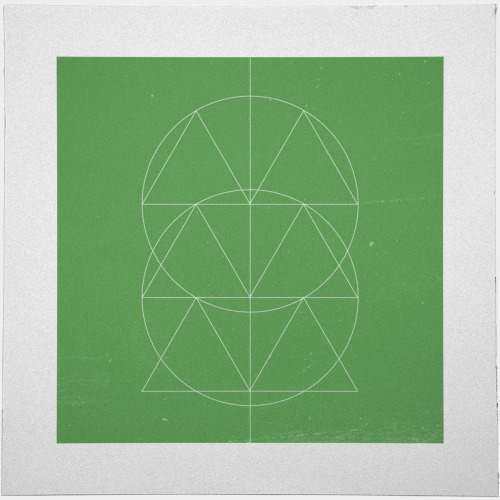
I was appreciating the geometrydaily:
#332 Totem – A new minimal geometric composition each day
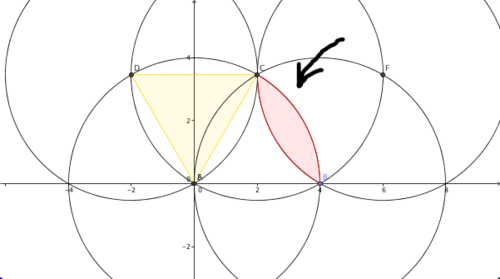
And got to noticing the always neat equliateral triangle proportions in the circle where the side length is the radius. So I have to fire up GeoGebra and start playing.


I got fascinated by the lenses formed by the circular arcs trapped by the triangles, and started wondering about tangential lenses in osculating congruent circles. (Petals, I was thinking. Pretty petals.) This is the special case when the cutting chord is a radius. So I made a sketch to play with lenses of different length.


Now I'm quite curious about those special lengths of the petals. Here's the sketch if you'd like to play with it:  teacher's page (download) and student's page (applet).

Other GeoGebra inspired by Geometry Daily:

Thursday, November 22, 2012

Mind Filling, part I

Image from a
Joe Bower post on the book.
Ellen Langer pioneered what she calls mindfulness research – coined to deliberately contrast with mindless behavior and action. Her principal book on the subject is Mindfulness, but she has also written many follow up volumes. One of them that is focused primarily on applications in education is The Power of Mindful Learning, our department book group read this semester.  It was raised as a possibility by my colleague Esther Billings. (Here's the promo I put together for the dept.; it includes a couple videos.)

It’s a short book with easy to read chapters, yet there’s much to discuss. We’re having two discussions, and this post is generated from notes from my reading and the first discussion. Each chapter is about an educational myth, introduced with a fairy-tale, and cross-referenced with particular bits of research. (In this summary I'll just pick one bit of research I found intriguing.)

The Book


Introduction: Little Red Riding Hood, overview of the 7 myths; pitches the book as a why-to rather than a how-to. Although she is a professor at Harvard, so is some mention of how she uses some of these ideas in her teaching. Mindfulness has three characteristics:
1.    continuous creation of new categories
2.    openness to new information
3.    implicit awareness of more than one perspective.
You can see how the alternative to these is also a good description of mindless behavior.

Chap 1: When Practice Makes Imperfect.
•    Story - the Little Prince and the lamplighter.
•    Myth - Basics must be learned so well they become second nature.
•    Research - same physics lesson for two groups, but one was told that this is one of several outlooks on physics, which may or may not be helpful. Students did equally well on direct testing, but students in the mindful group outperformed the others on extrapolation or creative use of the ideas.
Some of my connections were to student carrying out a skill regardless of whether appropriate (multiplying out factors when the objective is simplifying) or efficient (long-hand adding  1327 + 998).

Langer asks the costs for following rules without consideration of the context. In particular does drilling basic skills encourage carrying them out mindlessly? My questions: do we allow for individuation?  Do we give permission explicitly for different approaches? (Different than not forbidding them.) There’s explicit discussion of absolute and conditional approaches and how that relates to gender in K-12 math. Since we traditionally teach math so as to contradict earlier teaching. (You cannot subtract a larger number from a smaller; oops, yes, you can.)

Chap 2: Creative distraction
  • Story - the Three Languages (Bro.s Grimm) (new to me)
  • Myth - Paying attention means focusing on one thing at a time.
  • Research - students were asked to pay attention to a detail filled poster while sitting still, moving back and forth between marked spots, and sitting and shuffling their feet. The movement group outperformed the shuffling group which out performed the sitting still group. A related experiment in a Montessori (usually active) setting found a still group outperforming a movement group. Langer suggests novelty is the key.
I strongly connected this with the crushing repetition in many math classes. Homework! The idea here that distracted is distinct than differently attracted is powerful. Having students find and try different ways to approach work and obtain new information. Read for different comprehension processes, different objectives for doing homework, different choice schemes...  Feels like this might also help explain the myth of the great lesson. One of the effects of novelty is reducing the differences in achievement amongst diverse learners. To me that's evidence of the power of engagement, which means empowering learners to control their own engagement. (Course that could be spending sufficient time with Dave, read this.)

Chap 3: Delaying gratification is important.


Hold on a second. Scone break.  OK.

Chap 3: The Myth of Delayed Gratification
Elizabeth Bishop, Primer School
  • Story - bit from Elizabeth Bishop on starting school. 
  • Myth -  necessary work that is unnecessarily arduous can successfully be justified by future rewards.
  • Research - participants were asked to watch something they disliked. One group was asked to look for 3 or 6 distinctions, the other was not asked to do so. The groups that drew distinctions liked the activity more, and the more distinctions they found, the more they liked it. The other group saw no change in liking.

Interesting choice for the story. I wasn't familiar with Bishop,  and was disappointed this wasn't the fairy tale. Google books has quite a bit of her Collected Prose, including this whole story. Langer leaves out the math bit, which almost makes her point better than the part she does include.

This chapter felt like a stinging indictment of School Math As Usual, Grueling.  Why are we learning this? You'll need it for... Why do we have to memorize? You'll need it for...

This also leads to the next chapter.

Chap 4: The Hazards of Rote Memory


  • Story - Hansel and Gretel
  • Myth - memorization is way more useful than it is
  • Research - students were asked to read a high school literature essay, and either asked to "learn the material" or "make the material meaningful to themselves" with suggested ways of doing this.  Half of each group was told they would be tested. They were tested immediately, then given homework with the same instructions, and tested four days later. Students told to learn it for a test performed the worst. Testing made little difference among students told to make it meaningful.
It seems like the most frequent recipe given to struggling students is to do lots of practice with an emphasis on memorization and impending tests. 

Teaching Gap culture point of view.


The Discussion
One neat thing about the discussion was that Sadie Estrella joined our small group from Hawaii by Google Hangout.  I am definitely interested in exploring this tech more.

  • People noticed that up through this point, Langer had not addressed student interest and desire. How does desire and attitude effect us as teachers and students?
  • The rote memorization/drawing distinctions section really made us want to make the math more meaningful for students. 
  • The question of whether we make the material meaningful or teach students how to make the material meaningful. We can make ourselves into a pretzel, and it can affect achievement, but is it sustainable?
  • How much do students build the wall that stops them themselves?
  • Interesting the tension between the delaying gratification approach and noticing. 
  • How do we get students noticing? 
  • Representations
  • Choice:
    • Reduce the amount of: this is the way to do it
    • Choice results in more investment
    • What's good for me? Make students cognizant of what their own needs are.
  • Anticipate their strategies.
  • What is a good level of novelty?
  • Loved the idea in the book of being otherwise attracted vs distracted.
  • Very low effort shift: presenting things conditionally. "You could..." 
  • Interest in experimenting with Langer's notes on gender differences in math possibly being related to the absolute/conditional presentation.
  • What do multiple perspectives look like in math?
  • Someone connected these ideas with the book Math Exchanges by Kassia Wedekind. (Looks interesting.)
  • How could math practice look more like athletic practice where athletes put their own spin on skills and personalize their approach?
  • Connections must be important here:
    • connections from and to applications.
    • connections between different mathematical ideas.
  • How is this mindful learning the same as and different from critical thinking? Creative learning?
Have you read this book? Any thoughts on these ideas?

Our discussion of Chapters 4, 5 and 6 is this Monday, so look for part 2 soon!

Sunday, November 4, 2012

Mashup Artists

As I'm here at #edcampgr, I am struck over and over today by the idea of teaching as a mashup art. People talk a lot about teachers 'stealing' from teachers or other equivalent expressions, but it's more creative than that. It is amazing listening to these edcamp teachers.  The kind of teachers that give up a Saturday for free professional development, are willing to present when they didn't come here to do that, are here explicitly to take control of their own PD - these are amazing people.

It's really cool how much these teachers have in common, and yet have so much of their own to add, also. They share so many values, yet are implementing them in different ways. Being such a twitter-savvy conference, you see ideas intermingling from concurrent sessions.  Over the course of several sessions, you see people applying immediately what they heard from multiple sources in the next conversation.

Not actually math-positive.
Someone was talking with Dave Coffey and I about Khan (that happens), and that essential nature of teaching was part of the conversation. Constructivist teachers get frustrated with students asking us to tell them what to do, but then those teachers can ask that same thing. Tell me what to teach or how to teach. Or, worse in my eyes, teacher educators tell novice teachers (or, arrogantly, inservice teachers) Teach Like This.

Not the teachers at edcamp. Even when they hear something amazing, they think 'how can I adapt?' or 'what will this look like in my classroom?' or 'how does that relate to what someone else was talking about?'

A persistent idea for me is the student/learner distinction (if you haven't, watch these videos, please. I went there, used caps), but I feel like we need a similar distinction for teacher of students vs teacher of learners. This relates to another word-confusion, the Skemp idea of instrumental vs relational. We need a way to talk about these different ideas in a way that supports all teachers in improving.

That happens at an edcamp.


Some of the resources from the day:
Sessions I was in:
@benrimes Tech Savvy Ed website
Video Story Problems vimeo channel
@kiemanha's Inquiry Google site
Project Zero's resources
Thinking Routines for Numeracy
Neato Comprehension Continuum framework (pdf)
Edward Burger, Williams prof, author of 5 Elements of Effective Thinking
Burley School's iPad blog
K-12 open source eTextbooks 
@anthonydilaura's Innovative iPad blog

Others: (twitter lets you eavesdrop)
@taramaynard shared @kfouss' GeoGebra and Google Forms
@delta_dc shared Project Based Learning explained (YouTube)
@sjunkins How Twitter is reinventing collaboration among teachers
@Packwoman208's Flipped resources

More? Check out the #edcampGR twitter stream.


Thursday, October 18, 2012

Exponential Potential

It really struck me listening to Shawn Cornally in this week's #globalmath session on SBG (click on the Recording tab) how his perspective as a physics teacher leads him to approach his math lessons as experiments. Starting with an experience that makes us want to model or makes modeling useful is definitely the start of some of my favorite math lessons. (While I'm writing this he tweets: "Leaf-Blower soccer went over *really* well today in physics. (vectors, f=ma)")

Starting exponential functions with my preservice teachers, I love to use this lesson adapted from a 5th grade Math in Art lesson. (From my pre-blog webpage.) The idea is the multiplicative patterns present in a Sierpinski Carpet.


(Also in Word format if you want to edit.)

One of the interesting discussions in the initial exploration is the 9 or 17 issue. 9 squares if we count the number of squares as distinct shapes, 17 if we unitize to the smallest level square. For algebra students there's some good opportunities for equivalent expressions, regression and even deduction of function rules. This is a good opportunity for sharing how recording how you're getting your answer can be more powerful than recording answers. The 17, for example, is 1·9+8, then the next level is 9·(17)+8·8. But later, most write it as \( 9^n–8^n \) - which can lead to a pretty neat binomial expansion. Maybe even more interesting and accessible is the 9=1+8, so the next step is 73=1+8+8·8, and gives them a way to generalize this pattern besides recursion.

Once we get to the design your own carpet, there are so many new patterns to find. Here are some samples from this week:


Note that these last two aren't really Sierpinski patterns - but they still raise interesting patterning questions that are extensions of what we already noticed.

Probably easy to see why this is one of my favorite lessons. I also have seen the power of adding in places where students who have not traditionally been strong in math class can do amazing work.

The next lesson to follow up this one has some other opportunities to gather/generate multiplicative data.


It always strikes me how even college math majors find things to be surprised about in this data. Especially the penny balancing one. This class made some neat displays of their data - but I haven't taken the pictures yet. (Didn't know I would be blogging this, as I thought I already had! Maybe I was thinking of the quadratic simulations?) I'll add them at first opportunity.

First Opportunity:


Next we'll look at modeling this data symbolically using technology, and asking questions that raise the need for logarithms. Since, of course, every exponential data set is logarithmic when seen through the looking glass.

Sunday, October 14, 2012

Angle Acquisition

Quick game idea. I've had a few bustling around, and I've got to get started writing them down.

Observing student teachers is a great job. I get to see and have in depth teaching discussions with lots of hard-working, talented teachers.  And see a broad range of content. We use a coaching model, which helps these be positive exchanges and ratchet up the interest level of the dialogue.

I was observing Terry Austen (the class he writes about here) and realized that once students knew the terminology well for parallel lines they were correctly identifying and applying the relevant properties.

That gave me the idea for a game. I thought it would be neat if students used the terminology to capture points. My first idea was to have a parallel line puzzle - I like those as practice, too - and have the players build it and then take the pieces. That's a lot of set up, though, so I decided on cards to make for less preparation. There's name cards to cut out, still.


Let me know what you think. I'll try it out with the PSTs this semester and post an update.

Friday, October 12, 2012

3rd Degree

I Love Charts, constant source of fun graphics, had a fun temperature comparison chart. temperature graph, complete with fun. I did share my graphs finally. I used GeoGebra to make them, of course, because that's the best accurate mathematical image maker. Easy enough to make all three variations. Which, of course, lead to wondering what features would you put in a dynamic sketch for it? How could you make the sketch switch between the three ranges?
But it wasn't to scale, so I started thinking about what that would look like. Just lengths? What's the norm? Then Shawn Cornally shared his oneupped

So I had to make it then. Obviously. It's on GeoGebraTube: for download or use as an applet.

Instead of checkboxes, I knew I wanted a slider to switch amongst Kelvin, Fahrenheit and Celsius as the input. I thought about adding an input box for conversion, but those still don't work on the iPad, and I'm trying to think about that more.

The idea came to make the segments for the 0 to 100 degree temperature range where the endpoints were a function of the slider. Then I just needed a particular value for three different inputs, so it would only have to be a quadratic. I started to go to Wolfram|Alpha to do the regression, when I realized that, of course, GeoGebra would do it more easily. So with the slider at values 0, 1 and 2, the range for Fahrenheit, for example, is just determined by
F0(x)=FitPoly[{(0, -459.67), (1, 0), (2, 32)}, 2]
F100(x)=FitPoly[{(0, -279.67), (1, 100), (2, 212)}, 2]
a=Segment[(3, F0(n)), (3, F100(n))]
I was struck again by how nice GeoGebra is as a source of activities for students, but also how rich the task of making things in GeoGebra is, and wonder: how do I encourage more sketch creation from students?

Having sunk the time into making the sketch, I did think about what activity could go with it, and whipped this up:


I'd be interested in feedback on the sketch. Does it have the features you'd want for your students to use? Should it have more cute doodads? What do you think about the design of such a sketch as a task? How far should the students be past the material before trying to design the sketch?