Monday, October 30, 2023

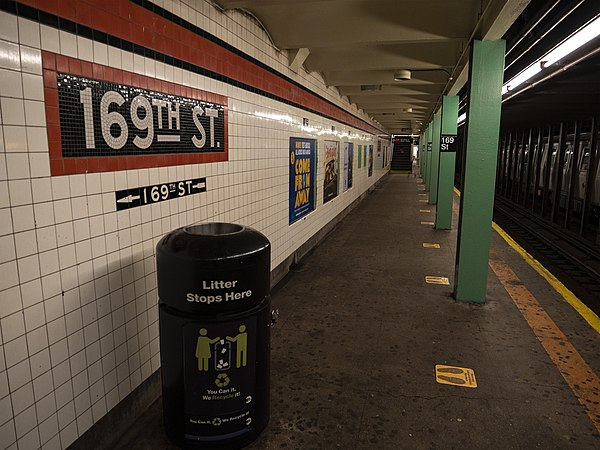
Playful Math Carnival 169

 Do you want to host the 13^2 Playful Math carnival in October? A month that had a Friday the 13th

Yes, please. Should have been on 10/13 instead of 10/31 but... apologies.

169 is a palindrome in two number bases less than 16. Which do you suppose?

All odd squares are centered octagonal numbers, but 169 is also a centered hexagonal. (Visualize more with Alex CHIK's GeoGebra.)

It is the smallest square that is prime upside down! What on earth could the next one be? Also 1666666999999999 is prime. What would you call that property? (Both via PrimeCurios.)

It's the last square in the Pell sequence, which are connected to approximations of π. What numerator n makes n/129 an approximation of π?
Puzzling

I'm using tangrams in an elementary math ed course as our primary manipulative to talk geometry, so I maybe have been too on the lookout. Simona Riva has a great GeoGebra collection of activities. Polypad has a great tangram puzzle collection. Here are some I found on a cereal box! But most of all, you have to see Paula Beardell Krieg's amazing series of tangram posts from this summer.

Futility Closet shared a ridiculous Lee Sallows pangeomagic square.

Bakingmoomins made a Hat Hat with the new Einstein tile.

Games

Always on the lookout for games. Tracy Proffitt has an awesome collection, well organized.

Interesting double or halve game from NRICH.

Sarah Carter shared the Ghost Game, fun logic/strategy game.

Sophia Wood and Kate Nowak with a great math game over on Brilliant: Halfsies

Content

Jenna Laib interviewed Kindergartners about zero. Great read!

Steve Phelps is the most amazing teacher with tech I know. He has a geometric constructions Desmos activity.

Eugenia Cheng on NPR addressing "Is math real?"

Mathigon now has an online implementation of Multiply by Heart by Dan Finkel.

NCTM has a new line of kids books on Powerful Mathematicians Who Changed the World.

Karen Campe has a calendar of problems every month, solutions at the end of the month. Here's October.


Humor

Sara VanDerWerf pointed out that SNL did a measurement skit. Warning: actually funny.

Kassia Wedekind shared a McSweeney's post from a teacher about teaching a curriculum with fidelity. Warning: a little too close to reality.

Fashion

Fashion? Libo Valencia has #mathplay t-shirts to go with his cool book.

Mathober

Sophia Wood started #Mathober a few years ago. Art and more on a math theme. Find many posts on Twitter or Mastodon or Bluesky. I've been liking Katie Steckles' π minute GeoGebra videos.


Last Stop

Last but not least, two playful bits from my students! Corinna, Leah, Jordan, Kacy and Jill made a Spooky Monster Escape Room in Desmos Activities. Ryan, Keri, Alex, Anna, and Emma have a new headbandz inspired math game for grades 5 and up called Math Heads. And by up, we mean up to college math majors!

At the home of the Playful Math Carnival, you can find previous, like 168 at find your factors, or connect to host yourself. I'd highly recommend it! Find the next one, Nov/Dec at the Fairy Math Mother. Should be magical.

This is my stop! Hope you had fun.

P.S. This will get you to go. Ed Southall asked AI to make images of people enjoying math...


Thursday, October 5, 2023

Elicit Student Thinking


In Michigan, at least, the high leverage practices are dominating the teacher preparation conversation. For our new certification programs, the state waaants to know where are we doing it. Nothing new there, just... enumerated. Some are beyond what we can do in math classes. But where it all starts for us, I think, is eliciting student thinking. I have an interview project coming up, in an elementary teaching class I'm teaching for the first time, and thought to ask on social media what teachers do or think about this core process. (Used to just be Twitter, now I'm trying Mastodon and BlueSky.)

#classroommath #mtechat one of the main objectives with preservice teachers is to work on the practice of eliciting student thinking. What advice do you have for them? How did you get better at it? What are you working on now?

Lani Horn had a quick, impactful response (bsky). "I find that the work of eliciting needs to be followed with some work on listening and interpreting. i have seen some folks stop at just eliciting, and it becomes "what do you think? what do you think?" without any connections built."

Elizabeth continued: "OMG yes. Learning to listen is a challenge for many pre-service & new teachers, and I often wonder if this is because they feel so rushed/anxious themselves.

Listen, swallow, take a breath -- just because a student has spoken in response to a prompt doesn't mean I've heard them yet.

Another thought -- could we also stipulate that asking a clarifying question can also be also an essential part of teacher listening?"

Shelby Strong also responded to Lani: "YES. It's not enough just to hear a bunch of different ideas; what is similar and different about those ideas?"

Learners are definitely interested when they know you are interested. How many times have they had a teacher gloss over their answer while really just looking for what they want to hear. "Tell me more" is a phrase I try to use a lot.

Mike Steele said: "When you catch yourself thinking about what to say next when students are talking… don’t. Focus on listening. Take a beat before speaking."

Nick Smith noted: "I like the other replies here and I'll add, "Never say anything a student can say." 

I think too often I'm doing the thinking for them. The less I talk, the more I hear their thinking instead of my own." 

Good indicator. Especially tough as a novice, maybe, when you have to think more about what's next.

Shelby also said: "Get students to turn and talk and prep them that you are going to ask them to share what their partner said. It lowers the stakes because it's just one other person listening to their ideas, and it takes the pressure off of sharing their own ideas."

Karen Campe responded: "Oooh I like that... encourages careful listening to your partner!"

Coutney Flessner added: "I LOVE using this strategy. I also don’t have students share their work. They already know it! The class analyzes it and we ask the author if we missed anything. Kids are significantly more engaged with each other and math with both these instructional routines. Ryan Flessner introduced both to me!"

Your students who always talk will still try to say what they said, but I think this is a moment for them to hear what others see them as saying. 

Karen was also thinking about wait time: "An important step is to give Ss individual think time before talking to partners/groups or sharing out to class -- the T shouldn't solicit any responses until that essential time has happened. 

That way, everyone engages, & no priority to fast thinkers or those who can do it in their head. 

Then you can elicit their thinking.

I was so bad at wait time early in my career that I had to actual count on my fingers (behind my back) to be sure I gave thinking time before discussing. 

Tierney Kennedy also has a teacher hack: "My advice: take a drink bottle with you to groups. When kids ask a question or when you ask them one, take a mouthful. It builds in an automatic thinking moment. Plus sometimes they end up answering their own question." 

Trey Goesh thinking similarly: "I like to have students take 60 seconds to record their ideas silently before having them talk to a partner.

You can feel the tension ratcheting up as they collect the ideas they want to share."

Wait time is such an amazing tool. Really lets learners know you are really asking, not just checking 'any questions.' 

Dee Crescitelli has the objective in mind: "Listen to student thinking with an ear for the mathematical goal of the lesson… we should be thinking about the math story the classroom discussion is telling. How do student responses & representations connect to tell that story?"

Peg Cagle also thinking about what you're asking: "Make sure that you ask about their ideas/thinking not their “answer”, and make sure they know you are genuinely curious about & interested in what they tell you. Answers w/o thinking-worthless. Ideas w/o answers, immensely valuable…& to everyone in the room!" 

Tara Maynard: "Try to always find a positive in their thinking and then find the misconception. Ask students to write, draw, sketch how they found their solution, not just verbal interaction. Always trying to provide feedback that is helpful yet doesn’t take hours." 

This might violate Mike's advice to keep your mind where it's at, but I do this a lot, thinking about the summary/reflection for the lesson. I probably open floor question too much to summarize, but if there is an idea missing, I like knowing whom to call. 

Arika Byman said: "Model genuine curiosity every chance you get. Provide sentence/question stems to help students organize and articulate their thinking. Be patient and persistent!" 

The stems idea is another idea of which I don't do enough.  The curiosity is crucial. There are so many things I genuinely want to know about learner thinking, why not ask?

Another few people were thinking about the math about which you're asking:

Rose said: "# talks and visual patterns tell Ss you want to know what they 💭 esp bc everyone has dif ideas. Shifted my mindset too!

Working on: design small group tasks/materials that encourage Ss to share their ideas w/each other. Generally ⬆️ S talk. S talk = window into their thinking."

Sian Zelbo said: "One aspect of eliciting student thinking is asking questions that are open-ended enough that you get a range of answers.  If you ask something that is essentially procedural students can't share their thinking bc they have none."

Lastly, is sharing thinking a part of your class culture?

Susan Russo said: "One thing that helps is to model your own thought process out loud. Not: this is what I’m doing but: First I notice this, and that leads me to think it might be good to go this way so I’ll try that and see where it leads. But now I wonder… 

If you are also sharing genuine thinking it is a great model for when you ask for theirs. 

What did you notice about these responses? What would you add or emphasize? There's a comment section below just waiting for you.

I'm really grateful to all who responded. Whatever media site we wind up on, I'll be there, because talking to teachers is the best way to teach better.


Tuesday, August 15, 2023

Old Dog, New Complex


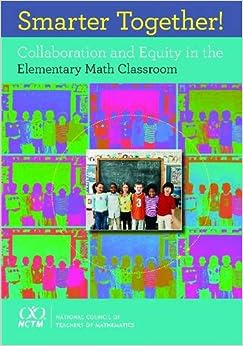
 I was very excited when we were able to hire Joy Oslund last year. Great teacher, experienced professor, and she brought expertise in complex instruction (CI) which was completely new to our department. She wrote the book!

OK, a book, Smarter Together, which, appropriately, was collaborative itself. 


Dave Coffey and I interviewed her for Teaching Like Ted Lasso, if you'd like to hear her for yourself.


She's leading a professional development for faculty in CI here in the math department. Small group, supported by the U and by our state AMTE chapter.

There's a few texts people have for it. Everyone has Designing Groupwork by Cohen and Lotan, 3rd edition of the seminal text. The book presents the case for why group work is helpful, and examines why it so often is not helpful in practice.

Day 1

Introductions. Why are we here?


One feature of Joy's classroom is a smartness wall.  We were each asked to write one way we are smart in math. Learners add to it throughout the year or course. Lisa Hawley, another new colleague, does one at the beginning and one at the end for them to compare. She noted that they often shift from content claims to process claims, and how many more ways they think there are to be smart at the end. The decision to use 'smart', which is loaded, is that they do already have ideas about that, and using it gives us an opportunity to intervene.

Community Agreement. What do we need to have a safe classroom, where we are free to take risks?


Groupwork norms: 

  • quick start, 
  • no one is done until everyone understands (each step!), 
  • work the whole time, (trying this year)
  • call the instructor for group questions only, 
  • middle space - there was a table whiteboard in the middle of the table which we were encouraged to keep open and collaborative. 

Groupworthy tasks require multiple abilities and can't be done alone. "If it can be done alone, it will be." We did an activity with instructions for folding an open-top box (not quite this one, a little simpler) from squares of different sizes and then measured volume with beans and cubes, then had to predict the volume of a different size box. There were two copies of the task instructions, one copy of the origami instructions, a few beans, a few cubes. Plenty of interest even for mathematicians and math educators to get engaged and want to keep going. 

Afterwards, we discussed what we noticed about the task. There was a lot to notice. We really could not have done it alone in the time allotted, and there was meaningful work for everyone.


Working on the task, we had roles. I have not been able to get roles to work for me before, but I've really been thinking about how I haven't pushed for them, and never really done anything to teach how to do them. These feel less made up than some other roles, and, I think, are really another implementation of the norms.

Roles

  • Team Captain - fills in missing roles, moves people along
  • Resource Monitor  - call instructor, distribute supplies 
  • Facilitator - task gets read, everyone understands task
  • Recorder/Reporter
Our names were slotted into groups and roles randomly. It doesn't have to be completely random, but visible randomness is recommended. (This is not the only overlap with building thinking classrooms.)

Individual and group accountability. Joy often follows an activity with the groups sharing results, and learners writing an individual reflection, responding to one or more prompts. In addition, while we were working, Joy did a "Participation Quiz" - teacher notes in a public space on what they observed groups doing. Great at beginning of course and when group work starts declining in quality/evidencing the norms. 


Status

Academic, Social, and the perception of that by the student, their peers and the teacher. This is really what complex instruction is about. We watched the first half of this. 


Painful, and familiar.  How many times have I seen similar in my class and not intervened? Perpetuating status.

Worse, we discussed how often we blame learners for the lack of involvement which their status denies them. In the video, to these kids' credit, you can see how much they still want to join in, despite what has been clearly repeated hurtful exclusions.

We spent a few minutes with an excellent teacher activity, filling out a smartness chart for a few students, then discussing about whom we were writing, and what made them notable to us. I mostly thought about my summer class, which started better than it ended. I lost a couple students, and have thought a lot about what I should be doing.  At the beginning of the semester, I was trying to implement what I knew about CI, but fell back into my old habits, which allowed students to work in parallel rather than really in groups. At first, I could remind them to discuss, but then that had diminishing returns, too.

There's a CI site at Stanford with some of the skill builder activities. We closed with the Broken Circles activity (link to .doc file), which was a really good one for promoting collaboration and noticing.

Definitely looking forward to days 2 and 3. Which, bloggods willing, I will also try to write about.

Saturday, July 8, 2023

Games Before Class

 I'm teaching a quick 6 week Intermediate Algebra (linear/quadratic/exponential) for incoming freshman this summer. Part of my goal is to convince them that math is different than how they might have been exposed to it. On day 1, we started with Wordle. A few learners had played it before, but quickly the whole class picked up the idea, and there were several good deductions about which letters could go where. The rest of the week, we played the daily Wordle before class the rest of the week.

This week, we started with SET. A little harder to understand, but there's so much logic. The daily puzzle has up to six solutions, which seems to allow for more participation. (Kelly Spoon noted Set with Friends for online actual game play, plus variants.)

I had ideas about what I wanted to do in subsequent weeks, but I was curious what others think and asked on Twitter. BOOM, people exploded with a bevy of resources. I used to have a blog where I shared resources, where did I put that...? After Sam and Julie posted about moving to Mastodon (because of Twitter's Troubles), I tried posting there, too.

Math Online Games & Apps

  • FiddleBrix suggested by Benjamin Dickman. He suggested downloading the app, then handwrite a previous puzzle. This is a super challenging puzzle, to me, but Benjamin's suggestions are gold.
  • SumIt puzzle suggested by Kelly Spoon. Lots of stuff there.
  • Beast Academy All Ten also via Kelly. Really great arithmetic challenge.
  • Draggin Math pay app, 
  • Shirley McDonald suggested a lot of great stuff: All Ten by Beast Academy (always an open tab in my browser), Number Hive (like the Product Game on a hexagon board), Skyscrapers (Latin square with clues, from a site with lots of puzzles) and Digit Party (implementation of a Ben Orlin game; also an open tab, I may have a tab problem).
  • Shirley also recommended Mathigon's Puzzle of the Day. I've been playing that in an app more days than not. (I think I'm getting better?)
  • Kathy Henderson suggested the NYT Connections game, which I hadn't seen yet. That is very much in the spirit of what I'm looking for!

IRL Math Games (Free and Commercial)

  • David Butler has a great collection of activities, his 100 Factorial. He singled out Digit Disguises and Which Number Where
  • Neal W recommended: Quixx is a great dice game and very easy to learn. My students love 20  Express. There are rules and scoresheets online.
  • Tom Cutrofello suggested the excellent Turnstyle puzzle he designed for Brainwright!
  • Prime Climb by Dan Finkel, suggested by Amie Albrecht. She notes, especially David Butler's human scale Prime Climb. (Which I have played and love.
  • Anna Blinstein suggested Anna Weltman's Snugglenumbers, which is a great variation on a target number game.
  • Pat Bellew said remember the original: Mastermind. Erick Lee has a Desmos activity implementarion of the math version, Pico, Fermi, Bagel.
  • Sian Zelbo claims Jotto is better than the either Wordle or Mastermind. (Online version.)
  • Becky Steele cited David Coffey for Taco Cat Goat Cheese Pizza as well as Farkle.
  • Chris Conrad recommended Quarto, amazing strategy game. Amie mentioned you can play with SET cards - how amazing is that idea. Karen Campe remembered this great Aperiodical article about the game.
  • Mardi Nott, Bradford Dykes and Jenna Laib vouch for Charty Party - that's a strong recommendation. Bradford also brought up this stats version of Spot It, the Graphic Continuum Match It Game.
  • Ms. Morris suggested Nine Men's Morris. Interesting game idea.

Puzzles

  • Kim McIntyre suggested Sarah Carter's big collection of classroom puzzles. I have learned so many puzzles from her over the years, but especially the Naoki Inaba puzzles.
  • Speaking of Japanese puzzles, Gregory White suggests Shikaku.
  • Benjamin Dickman and Shirley and Gayle Herrington suggested KenKen. I've used those with younger learners and college students.
  • Karen Campe had several suggestions, some in this blogpost. Times UK puzzle page, StarBattle, Suko
  • suggested Mobiles. Love those, and we do lessons based on them. Here's a challenge problem I asked them!
  • Druin suggested the Puzzle Library, which I can't access for some reason. Looks like they're intentionally made for schools.
  • Susan Russo linked Cryptograms, which are some cool cruptographic puzzles. I haven't tried anything like this and am curious.
  • Sarcasymptote brought up Sideways Arithmetic from Wayside School, which is what I was expecting from Cryptograms, thinking it was cryptarithms. But somehow have never seen that book despite loving Wayside.
  • Ms. Morris linked a Magic Square app.
Activity Ideas

So my plans as of now are:
  • Wordle
  • SET (both in the books and worked well)
  • Connections (I like that this will alternate word and math)
  • All Ten (Digit Party would make a better game, but is harder to kibbitz on as people come in.)
  • Mastermind
  • Henri Picciotto's Supertangrams. (a- recently got them! b - they are so amazing. c- be nice to close with something tangible.)
Thanks to everyone who replied! Wherever the math teachers are chatting, I'll continue to be there.

Friday, February 3, 2023

G.L.A.S. Game

 I'm very excited to share this game with you. Jenisa Henry invented it for our senior math game seminar, and it shows a LOT of promise.  As she pitches it, it's an early elementary game, but it is highly suited for variations I'll discuss after you hear from Jenisa.


Her rules printout in on Google drive: bit.ly/GLASrules. She writes this about the game development:

My brainstorming for G.L.A.S. first started because I knew I wanted to create a game I can play in my future lower elementary classroom. Knowing that these years it is important to learn simple addition and subtraction facts while understanding equalities I toyed around with the first version of this game. It started with players using their top four cards to create an equality, then use their biggest sum to compare to the opponents biggest sum. It was rough to begin with, until I found the game more or less. This game solidified my idea on wanting to pursue designing a game with equalities. Though, I knew I wanted to add in another element to it, that was the addition and subtraction. Once I added that element to the game, I knew I had to think of a method for making the calls. I knew adding this element would offer choice to the players. I’ve learned to value games that have choices for the players as it makes them feel more active in playing. Once I added that, the game was great. I loved it and it was fun to play.

However, there was still something missing. An element of surprise was just what the game needed and that is when the Queen chance card came into play. This added the perfect amount of randomness that the game needed. After the playtesting went well, I knew it was exactly what I wanted the game to become.

G.L.A.S. is a great game that all teachers for 2nd-3rd grade should have their students playing. There are many reasons students should play this game, many benefits for the students to gather. Most simply, addition and subtraction facts are majorly important for the students to recall as they progress through their schooling. Additionally, the exploration of greater than and less than is the beginning of a building block for equalities. It is also a game of strategy. By using the cards in the players’ hand they need to strategically pick what they want to call. Further, they have to decide what two cards to operate on to get a sum that may satisfy the called equality. My personal favorite is when we have greater than for the equality and subtraction for the operation or less than and addition.

There is another variation to this game that has an emphasis on place value. Players will still call an equality, though instead of an operation they’ll pick the desired length of the number 1 digits-4 digits. All other rules still apply as far as card values, though 10’s do represent 2-digits. This game is very interesting as many variations can be created. As another example, this game can be played where the operation is strictly multiplication, a fraction version could even be created. Changing the game in these ways extends it to reach more grade levels as well as more areas within the mathematics realm.

For me, the break through of this game is the double choice. Giving both players significant choices each turn really makes this one of the best computation games I've seen. The adaptability is significant. In addition to place value, they experimented with multiplication and division, which would be good 5th-8th grade. You could do two digit computations (draw 6 cards), or even mix, 2 cards +/– 1 card.

Also for the course, teachers make a video for a game they want to promote. Jenisa chose +/– 24.


Explaining why this game, she writes: 

+/- 24 makes a phenomenal classroom game because of its quick nature and simple materials. Only requiring three simple materials that typically already reside in the classroom requires less preparation time for any teacher or helper. With simple rules, students will be able to grasp the game fairly easily. With there being many ways to create the desired outcome, there are multiple entry points for any and all students. This allows for students to stick to addition and subtraction, if they need or use the alternative operations if they feel comfortable. This is also a great game to use to bring attention to the associative and commutative properties. All the while, students are manipulating numbers to get their desired result. There is both strategy and critical thinking within this game, allowing students to be challenged when playing.

I agree! 

If you get a chance to play GLAS or try it with kids, I would love to hear about it!


Friday, September 30, 2022

Playful Math Carnival 159

Welcome one and all! Come on in and have a ball. 159 is semiprime and that's just fine.

Lucky that I'm hosting this, or is it just that 159 is lucky. How do you get lucky? Start with the counting numbers. Delete every 2nd number, leaving 1 3 5 7 9 11 13 15 17 19 21 23 25 27 29 31 33 35 37 39 41 43 45... odd.  The 2nd number remaining is 3, so delete every 3rd number, leaving 1 3 7 9 13 15 19 21 25 27 31 33 37 39 43 45... now that's interesting in and of itself. Next delete every 7th number, leaving 1 3 7 9 13 15 21 25 27 31 33 37 43 45 ...; now delete every 9th number; etc.  How far do we have to go before we know 159 is lucky? Does knowing 151 is the previous lucky number help? Interesting to look at the gaps in each step, and the cutlist for each step.


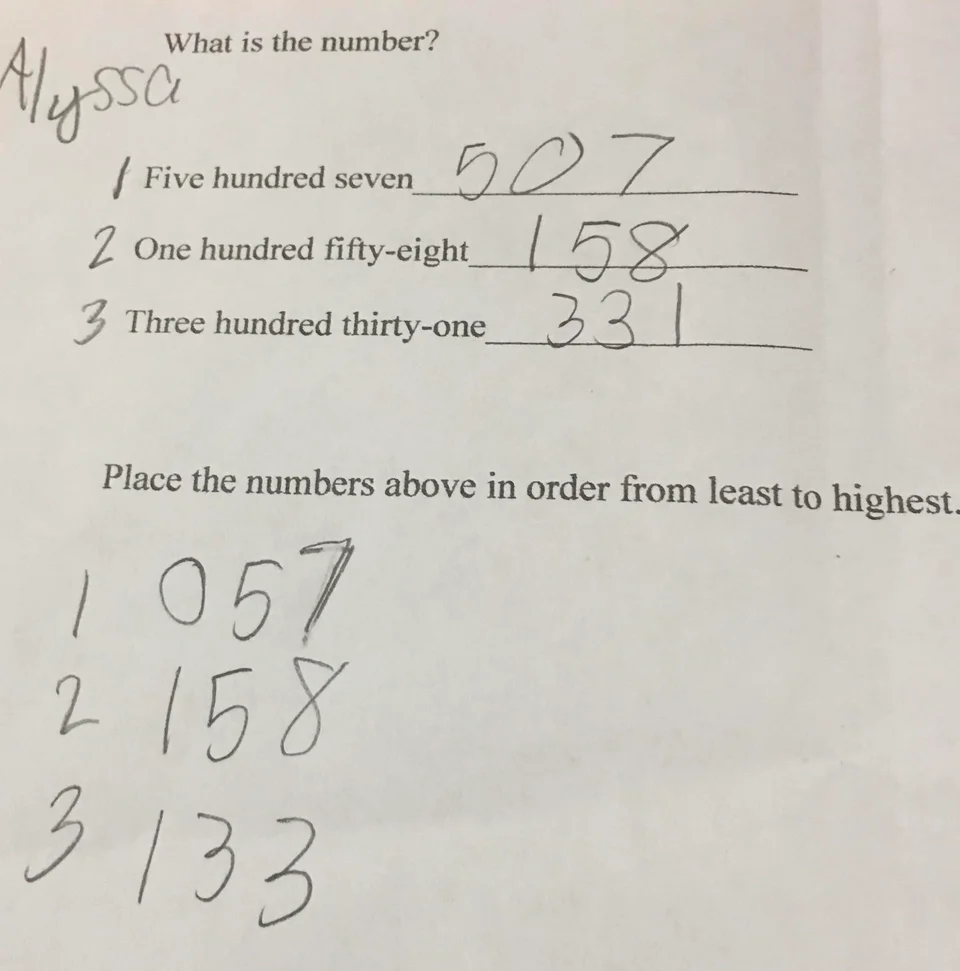
Is it rarer to be a semiprime or a number with only odd digits? Odd increasing digits? Linear pattern in its digits?  Alyssa would like it as is.

Pat Bellew's 159 facts are that 159 is the sum of 3 consecutive prime numbers (which?) and can be written as the difference of two squares in two different ways (don't you want to find them?).

He also has that __ __ •159 = __ __ __ __ using all 9 nonzero digits. Of course, you can brute force it, but can you deduce this digitally complete product?


What #playfulmath have you seen this month? Here's some of what I have noticed.

September started with Math on a Stick in full swing. Doesn't get more playful than that!

Katie Steckles and Jimi went over the math in the Spider-Man No Way Home end credits. I lost my mind when watching it in the theatre, and am so glad someone's sharing it. SO MANY MC Escher references.

And as if the visuals weren't sufficient, the song is De La Soul's great cover of the Schoolhouse Rock classic, Three is a Magic Number.

Live human scale Prime Climb at NCTM-LA
photo Liesl McConchie


Is that Howie Hua? (Yes - He and Annie Forest won.)

as yet undiscovered unpentennium
Christine Thielen tweeted about her class' enjoyment of the Mathigon puzzle of the day.

Speaking of puzzle of the day, Michael Pershan wrote about this new Beast Academy (upper elementary and higher) daily arithmetic puzzle, Make Ten. I enjoy his PershMail newsletter each week.

The Erikson Institute is a great source for early math insights, and here they cover four playful number books.

Charlotte Sharpe shared a quick, rich early math game with dice and subitizing cards.

Michael Minas & helpers are back with an inequality game, Big Bad Wolf and the Three Little Pigs. 

Australian Math Circles shared this online interactive math game with lots of nice number recognition and sense images.

Libo Valencia tweeted about his class playing this angle game, Daniel Mentrard's Polar Battleship

He also shared his daughters catmathart... a perfect transition to the next section.


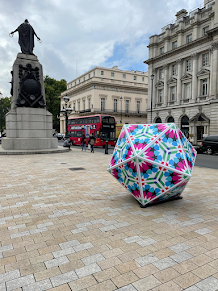
Zarah Hussain shared her icosahedron statue on public display in London.

Paula Beardell Krieg is always busy with something creative and beautiful. For instance, her Rather Strange Solids. (But while you're there, poke around.)


Sophia Wood does programming, teaching and art. Her latest bird is perched on an unorientable branch...


Sam Hartburn sang to some Ayliean artwork for a recent Clopen Mic Night.

SimonLav with a Marvel-ous Desmos animation.

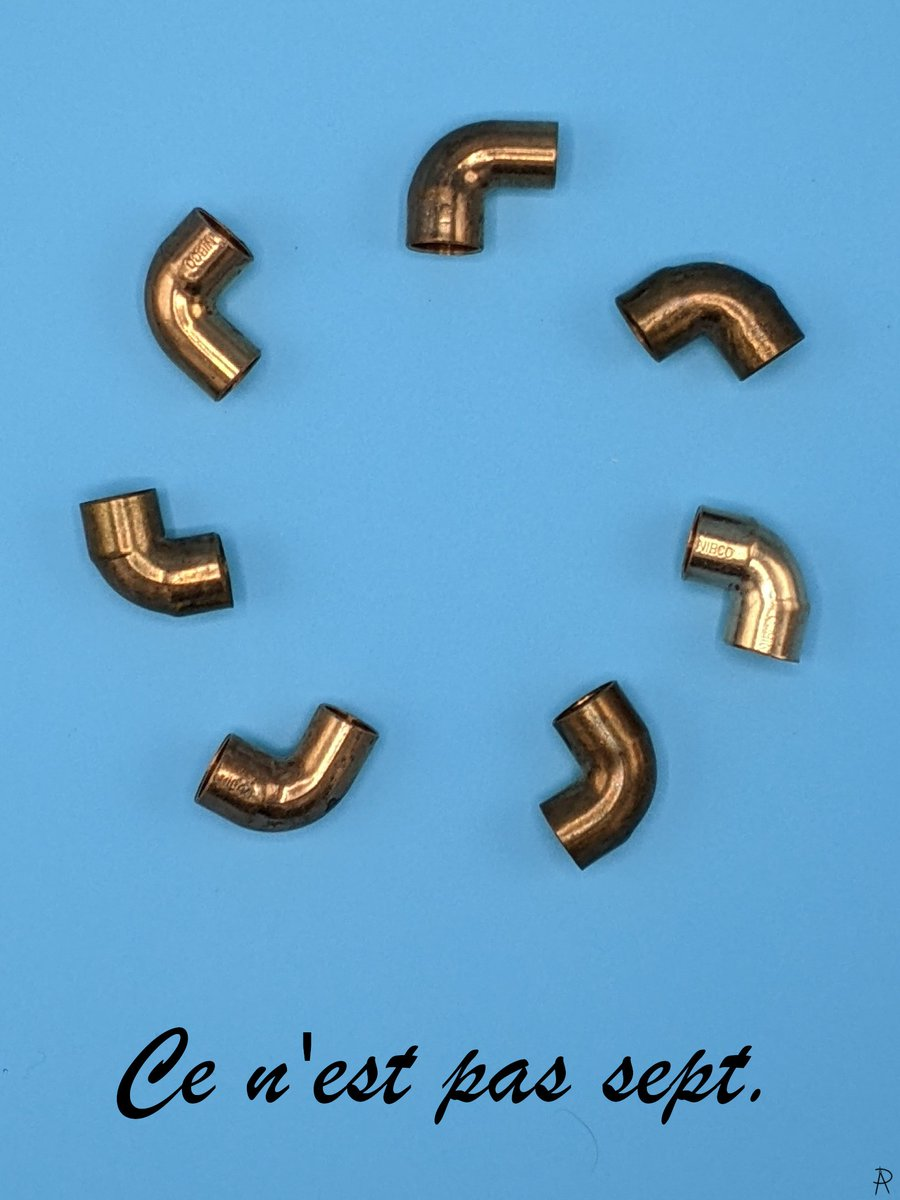
David Reimann nods to Magritte with this piece, related to his Bridges article.


Last but not least, I'm very happy to be a part of David Coffey's newest project: the Teaching Like Ted Lasso Podcast. Episode 1 is out, and it's on... PLAY! Check the show notes for scoonches of resources on play in math class.


As long as I'm on the pitch... just after this post on this blog are some very fun, well developed math games from my students.

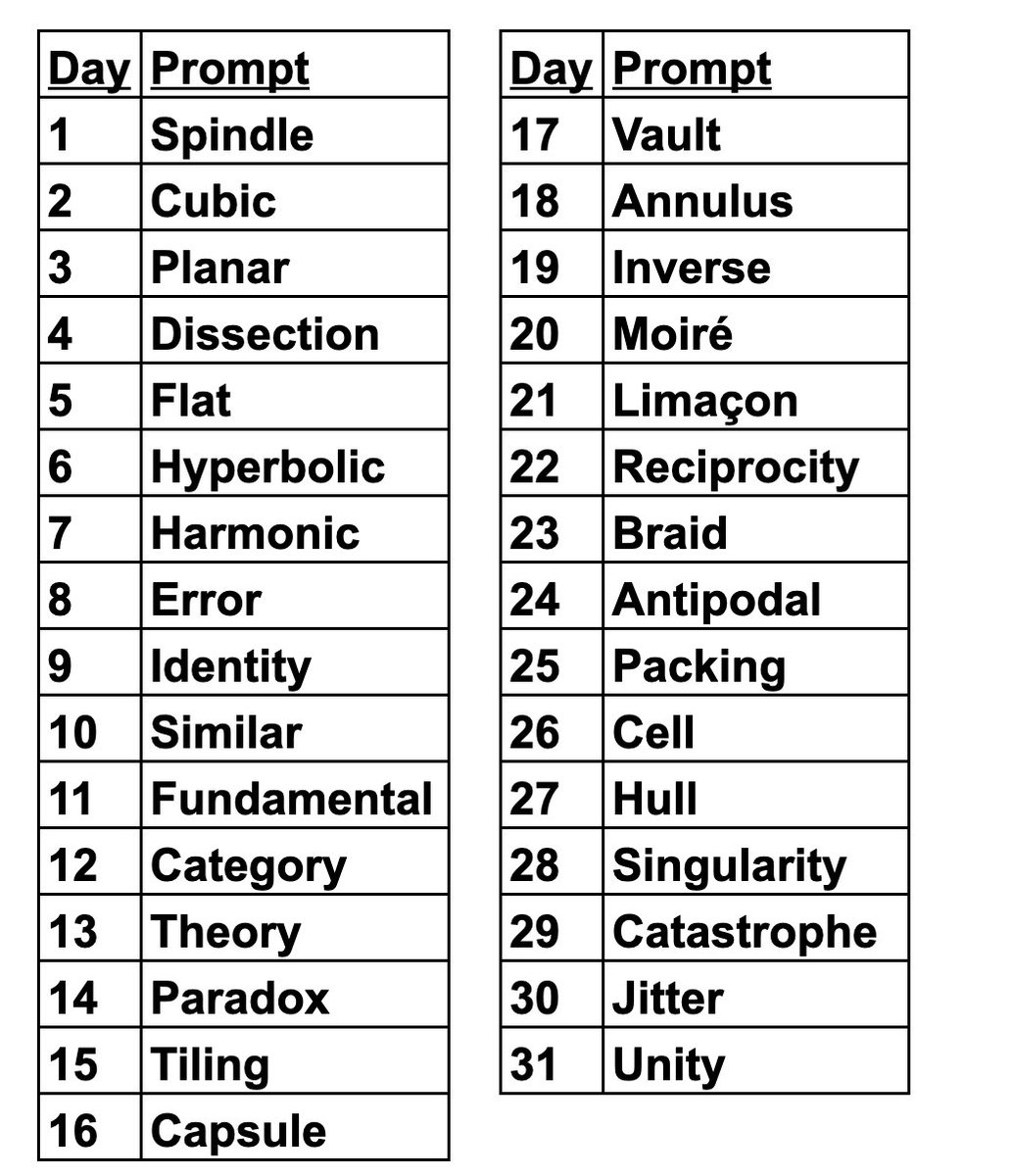
And what's next? #Mathober! Sophia Wood has put together a list of prompts.

Each day there's a theme. Share a bit of math, a doodle, a comic, some art on the theme. Play along one day, or all 31. Tweet or send it to Sophia or myself and we'll share.

Ferarri 159S 


See you next month at Denise Gaskins' place, the founder of this here blog carnival. Info there on how to ask to host. I highly recommend it! So much playful math to celebrate. While you're there, check out her weekly Math Game Monday.

Vroom!


Tuesday, September 6, 2022

College Algebra: Quadratics

 I had my elementary ed class canceled for low enrollment this fall. Make of that what you will.

The replacement course is College Algebra. Ironically named, since it is mostly Algebra 2. Which is required in Michigan. Our sequence has been 097 (prealgebra) -> 110 intermediate algebra (algebra 1) -> 122 College Algebra.  It used to be + 123 (trigonometry) to go on to Calculus, but we have a nice precalc class now (124) so people needing to take calculus that don't place into it can just take 1 semester. The audience for 122 then, is now general education, and people who need courses that require it, like the basic chemistry, intro physics, and statistics. It's a 3 credit course, and my section meets twice a week.

The course has traditionally been quadratics -> polynomials -> rational functions -> exponentials -> logarithms -> light touch of statistics. So what do we want from the quadratics unit? This post is me trying to think out loud to get it straight for myself. The schedule is pretty packed, so I have 2-3 weeks per topic, 4-6 class periods.

The instructional sequence I have planned is visual patterns -> modeling (Penny Circle and Will It Hit the Hoop?) -> graphing/equation forms (Match My Parabola & Form Fix) -> solving equations (vertex form & graphing), mostly in a modeling context.
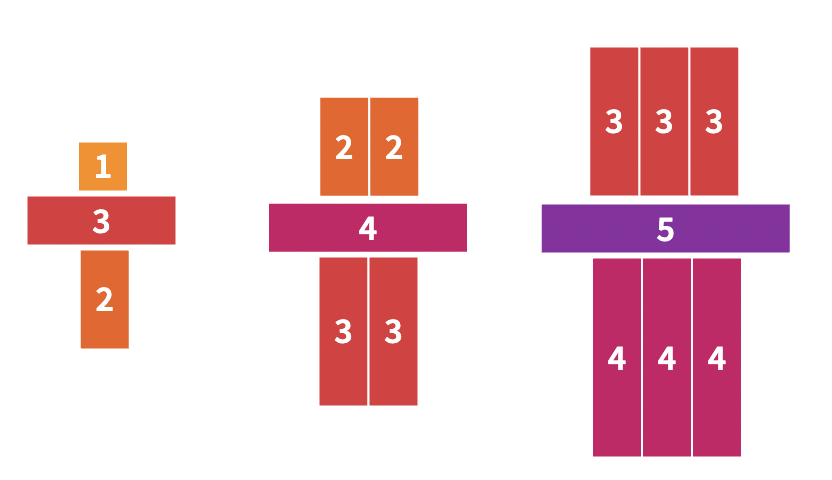
The visual patterns do a lot of work. They offer a hook, they give learners a chance to notice and wonder, they give us a chance to problem solve. They are also different from what most students have seen in algebra, sadly, so offer a way to let them know that this course might be different. I also have them read Elizabeth Statmore's post on math as a thinking class. I asked them, "What do you think the main idea is? How does this compare with your own ideas about learning math or your previous experiences?" and you can read their responses on this doc.  I think they get it. Mathematically, I think my main point is the use of variable as a relationship rather than an unknown. The transition from step number to x is very natural. Secondarily, they get to see multiple equivalent expressions. Which is one of those math ideas which many learners see as a bug, but mathematicians think is a central feature.  Part of the richness of these problems is what the old NCTM standards called the representation process standard. Tables, expressions, visual and the connections between them all move us forward. Here's a handout with four quadratic patterns. The bricks and the darts and kites are very difficult to visual make a symbolic rule for. I might have made them or might have found them at Fawn Nguyen's visualpatterns.org or it could be a mix.

Modeling is a key theme of the course, and Penny Circle and Will It the Hoop? are a good start to it. I was surprised how many learners went with an exponential form, and the reveal is the perfect way to settle it. We will be using Desmos activities a lot, and those are pretty slick introductions. The Penny Circle builds on the covariation use of variables, and the basketball leads into the graphing we'll be working on next. 

This is where we are as I write.

I'm convinced that one of the barriers for these students is understanding graphs. Thankfully, making them is easier than ever. But I don't think that many know how to think with them. Again with the representation standard, the connections between the symbolic expression and the graph is mostly taxonomical, and I want it to have meaning. Though this is a place where I could use some help. Regression supports this goal, as it brings tables into the web of connections. Activities where they vary parameteers and observe the effect on the graph help, at least in terms of taxonomy. Solving equations with graphs is an opportunity to build some of the understanding I want, as, especially for applications, the context is another piece of the representation. Writing this, I'm a little surprised by how hard it is for me to put my goal here into words. That would undoubtedly help with the teaching!

Solving equations is last for me, partly because it is so much what they perceived the focus to be in their previous math courses. I don't care especially for a lot of symbolic skill here. I don't teach solving by factoring, though the factored form in connection with graphs is something I emphasize. I do like the approach of solving from quadratic form, because it builds on a theme in math I love about doing and undoing. This leads better into exponentials and logarithms than it does polynomials and rational functions. The symbolic fluency that I want is being able to see a quadratic as series of steps. Take a number, subtract 2, square it, double it, add five is the same as  <math xmlns="http://www.w3.org/1998/Math/MathML" display="block" data-is-equatio="1" data-latex="2\left(x-2\right)^2+5=13"><mn>2</mn><msup><mrow data-mjx-texclass="INNER"><mo data-mjx-texclass="OPEN">(</mo><mi>x</mi><mo>−</mo><mn>2</mn><mo data-mjx-texclass="CLOSE">)</mo></mrow><mn>2</mn></msup><mo>+</mo><mn>5</mn><mo>=</mo><mn>13</mn></math>. To find what numbers make 13 from that function, we can do by undoing.  I love Graspable Math for this, as the dragging to undo seems to really help get across the idea, though it doesn't work on the balance nature of equations. Here's an example GM activity with 3 quadratics to solve.

I'm very interested in your thoughts. What are the key ideas you want in a quadratics unit? What am I leaving out that you love? What understanding do you want your learners to develop or skills do you want them to have for graphing? Why?

P.S.

Probably violating some internet rule here, but really liking the Twitter discussion about this post.

@DavidKButlerUoA: This line was very interesting: "multiple equivalent expressions... is one of those math ideas which many learners see as a bug, but mathematicians think is a central feature". I'd love to hear more about that.

@joshuazucker: My interpretation is that beginners may want there to be only one answer and experts see how useful it is to have multiple representations that make different behaviors immediately visible.

@mathcurmudgeon: When 90% of calculus (and every math course, really) is rewriting expressions in an equivalent form that we can work with more easily.

@mathhombre: it starts with fractions. All these different ways to write the same thing. One of them must be right. (Often supported by teachers insisting on one.)  But that we can transform, rewrite and tinker leads to fluency, connections, and meaning.

@mathforge: The belief that out of all the ways of writing it there must be a RIGHT way is SUCH an interesting belief. I've never thought before that people might believe this.

I suspect that this is more prevelant than we might admit. As experienced mathematicians we might chuckle at people who think that there is a "best" way to write, say, a quadratic or a fraction. But we probably fall into the same trap with ideas.

I might, to take a random example, think that there is a "right" way to think about differentiation, or Pythagoras theorem, or a topology, or the category of smooth functions. What I mean is, "this is the way I find most intuitive".

===

@KarenCampe: Love the visual patterns start & modeling focus. 

When you do graphing equation forms & use match my graph/form fix you will surely cover symmetry of the graphs & how factoring gives x-ints. I like how graphing & alg manipulation of quadratics are interconnected...

Use graphing as tool to support any algebraic rearranging we might want. Look for hidden parabola that shows complex roots. Axis of symm hidden in quadratic formula.

===

[In response to "Quadratics unit in a college algebra course. What goes in, what's left out? "]

@theresawills: Probably too vague, but worth saying: RICH PROBLEM SOLVING.