Showing posts with label Math Teachers at Play. Show all posts

Friday, December 26, 2025

Playful Math Carnival 183

Welcome to the 183rd edition of the Playful Math Carnival. Begun by Denise Gaskins, previously known as Math Teachers at Play. If you'd be interested in hosting, just drop her a line. Previous editions are listed here! The most recent was Sue Van Hattum's Storytelling Carnival.

183 is a semiprime - though not too mysteriously, as 3 is a factor.

183 squares in this quarter circle. (Cf. A001182

New to me was Legendre's Three Square Theorem. Every number can be written as the sum of three squares, unless it is of the form 4^k(8*m+7). (Number theorists are wizards.) 183 = 8*22+7 so it cannot be. Also then, 175 and 191 cannot. Are there any closer integers to 183 which cannot? 

The totient of a counting number is how many natural numbers less than it are relatively prime. The totient of 9 (8, 7, 5, 4, 2, 1) is 6. The totient of 6 (5, 1) is 2. The totient of 2 is 1. Since 9 = 6+2+1, it's the sum of its iterated totients, which makes it a perfect totient number. So is 183! What is its totient sequence? I'll get you started, ϕ(183)=120. 

Projective planes are a fascinating structure that grew out of the study of perspective. One way to generate them is from a finite field. A finite field of order p^n (p a prime) has a projective plane of (p^n)^2+p^n+1 points. The Fano Plane on Z_2 is the most famous example. In our case, 183=13^2+13+1! What's the one before and the one after in this pattern?

183 is also in the sequence n^2-n+1, Hogben's oddly called central polygonal numbers. That means it's on the diagonal of the Ulam spiral. Which side will it be on?


Do you have a favorite 183 fact I've missed?

This edition is dedicated to those regularly producing and sharing new content. 

Regulars

Karen Campe is the definition of regular! Ever month a calendar of problems, and more besides. For example, December 2025 and her Pythagorean Squares activity.

Jim Propp does a monthly deep dive into a different topic each month for his mathematical enchantments column. So carefully crafted and well written. Consider this on Matrix Multiplication. Is it ugly?

Monthly? Pshaw! Pat Bellew has a daily post: on On This Day in Math. But also many other tidbits, like what about monkeys typing Shakespeare? (Of course, some wit pointed out that we already produced a primate who wrote Shakespeare. Shakespeare.)

Denise Gaskins gets close to daily, with her weekly Monday Math Games and Thinking Thursday and other posts besides.

Jenna Laib is a treasure trove. In addition to regular, amazing Slow Reveal Graphs, like this one on butterfly wingspans, she writes deep think pieces like this on culture and identity in math class.

David Petro does a regular feature with lists of resources as well.

Colleen Young does a feature of her own gathering links from all over, but also other posts, like these nifty RISP problems.

Kristin Gray covers a variety of topics, but I particularly enjoyed her list of math stories.

Maths for Humans has a variety of content, but I enjoyed this reflection on learners' problem solving.

Cambridge Mathematics does a monthly Espresso summarizing math ed research, and other features like their new podcast.

The Futility Closet isn't just math, but has amazing tidbits on a frequent basis. Like Lee Sallow's geomagic squares

I'm new to Dr. Austin's Maths, but she adds good problems on a regular basis.

Substack

Dylan Kane weekly shares his deep thoughts on math, teaching and teaching math. Here he pitches gradual increase of difficulty, vs release of responsibility.

Fawn Nguyen is back writing again. Some refreshed old hits, some all new content. Always amazing.  Here she's writing about when students write the questions.

Dan Meyer writes a lot about edtech especially AI, but still does some straight teaching talk, too. Like teaching is harder when the math is easier.

Grading for Growth is an alternative grading blog, featuring two of my colleagues among others. Here's Robert Talbert writing about the Four Pillars of Alternative Grading.

Videos

Christina Tondevold's got a regular Buildring Math Minds video series. I thought this one was a big one on the purpose of math learning, Doing and Thinking.

Meet a Mathematician introduces us to mathematicians and math teachers, like the cool Greg Lakey.

Kyle Pearce & Jon Orr have a Make Math Moments video more than once a week, tackling issues like moving towards efficiency.

Watch everything Howie Hua makes. Here he's arguing that 3x8 and 8x3 are different.


Here and There

Grant Snider is a brilliant cartoonist, getting a bit mathy on occasion. Especially with this bit on infinity.

Dan Scher is the leading person I know on Web Sketchpad. Here he shares a new idea Algebra Mazes.

You never know what Tanya Kovanhova is going to write about, but here's a math magic trick.

Sue Van Hattum is writing a terrific math series, getting at big ideas from an accessible angle. She'd love some beta readers... And she has put together a collection of teaching gems from the books.

I've been enjoying the art from the JMM/Bridges 2026 show.

Crazy cool Möbius band explorer from Ben Sparks.

Those fool Teaching Like Ted Lasso guys are back with a new episode on Joy and Softball

Sophia (FractalKitty) leads #mathober every year. Lots of interesting bits of math, art and coding were shared. 

Puzzles/Games:

  • Karen Campe suggested two. One Up, a kind of number maze.
  • Jigsy is the other. That's had an open tab since I first saw it! A geometric puzzle where you can scale the pieces. So clever. I appreciate the levels of difficulty.
  • Dive also gets a permanent tab. It's like 2048 for factors.
  • A Mathblr user came up with these neat irojirai puzzles on coloring a square.
  • I gathered 13 fraction games from a teacher ed course. 
  • I also tried to make a tangram like puzzle with 30-60-90 triangles. Here's some examples.

A list of 183 cm tall celebrities? I don't know all these people.


And on that note, I'm out! Hope you found something to get you playing with math.

Thursday, December 19, 2024

Playful Math Carnival 177

Interesting time to be hosting this carnival! I feel like there's a small resurgence with blogging, and I want to be part of it. I've really missed writing informally professionally. I've been a part-time host since Math Teachers at Play 22, 14 years ago!, and a big part of the original purpose of the blog was to collect, curate and share things that delighted and supported me. If you're interested in hosting, contact Denise Gaskins, the founder of this here carnival. The January carnival will be at her blog, but I think February is open!

177 is semiprime, for which two primes? 

177 is the ninth Leyland number, of the form x^y+y^x. What are x & y for 177? They're both prime, which should be a special kind of Leyland I think.

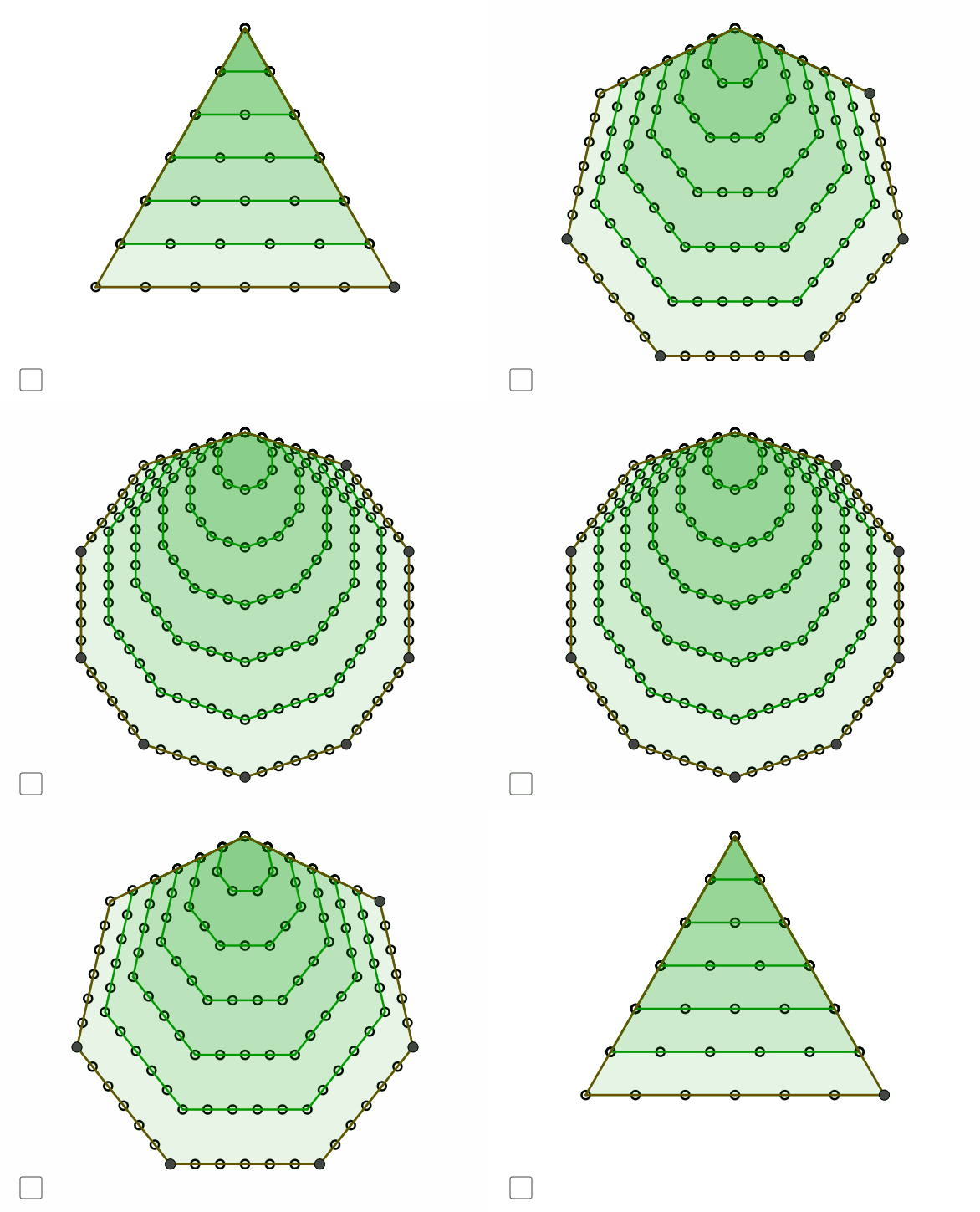
177 is the first "non-trivial" 60-gonal number. (1 and 60 are too easy.) What is the next 60-gonal number? (Pictured) What does the sequence of the first non-trivial n-gonal numbers look like? (6, 9, ...)

177 is a Leonardo number, so named by Edsgard Dijkstra for their relation to the Fibonacci numbers. The first five are 1, 1, 3, 5, 9... can you determine the pattern?

But the coolest thing to me is that it's the magic constant of the smallest magic square of distinct primes! I'll get you started...
(Thanks to Jim Olsen who caught a istake in my original!)

Supposedly the 2nd highest dart score is 177 - but I need someone to explain that to me. Supposedly I used to play darts!

177 is getting too big for many interesting images on Google image search. So I tried AI. Give me 177 ants marching! 75 at most. Give me a stack of 177 balls. Hmm... I don't think so. That set me off to GeoGebra to make a visualization tool.

Things are hopping over on Bluesky. Most of these links are from there. Here's a math teacher starter pack, or a mathsky star pack part 1 or part 2 or an #elemmathchat starter pack. Other good tags to check are #mathsky, #iteachmath or #mathstoday. So far it's been positive and energetic.


Gamey

Denise shares a math game every Monday, like Area Block or Coin Chain.

Sara Van Der Werf reshared her amazing 5x5 game, for adding, multiplying and a bit of strategy.

Erick Lee and his son invented a sweet exponents game that I'm dying to try.

Some fine mathematicians seem to have proved that Henry Dudeney's famous equilateral to square dissection is minimal. I made a GeoGebra puzzle out of it to celebrate. That dissection is hinged and Manuel Sada made GeoGebra for that! Denise shared a Dudeney game I had never seen before.

I've really been enjoying the Celtix puzzle by Andrew Taylor. Great UI. Multiple solutions to each, but took me awhile to get the hang of just focusing on one color at a time. Here's two solutions to Puzzle 177. HT Ayliean.

Sarah Carter, queen of math puzzles, shared some winter themed Sudoku puzzles, also available in Christmas flavor.

Catriona Agg continues to invent the sweetest geometry puzzles. This one with four equilateral triangles was really neat.

I've always thought a card sort was an activity that invited play. Marilyn Burns continues to amaze me, like here when she tried her first card sort!

David Flynn shared a puzzle he made for 3rd graders. Get from start to finish using only right angles.


Artsy

Xavier Golden (full relation) found the classic Eames math shorts (plus more) in a single YouTube playlist.

Ben Orlin's math with Bad Drawings is a constant delight, but I especially loved his musings on Edgar Degas and math.

Erick also shared an old Bree Pickford-Murray post making posters for missing hexagons (after first inventing hexagon types).

Min Min shared an old post of Sarah's making slope-keyed nameplates

Paula Beardell Krieg has a bunch of upcoming workshops, but still found time to share this open and close pop up.

Grant Snider drew a sweet math fable. (Is it a rhombus, though?)

Sue Van Hattum's super cool Althea series is continuing. Here she shares a problem with a problem.


Teachy


Nat Banting blogged about an essential teaching reminder.

Dan Wekselgreene shared a routine that my preservice secondary teachers tried and liked, Correct, Incorrect, Incomplete.

Jenna Laib writes about students writing silly story problems.

Glenn Waddell did a whole series of quadratics this fall, wrapping up with the mystery of the b coefficient.

Dylan Kane never lost the beat, still the most consistent math teacher writer. Here he's thinking about Ben Orlin's book and Hemingway and Negative Numbers.


Extry

Maybe you're looking for last minute mathy gifts? Thanks, Aperiodical. Who wouldn't want a handmade zine? How you could wrap them from this post.

Ali Almossawi shares some math history about a few great mathematicians who were famously slow.

I didn't get many math comics made this #mathtober  but this was definitely the biggest hit.


That's it for me! See you next year. Coming soon, Xavier's and my math graphic novel, AL, Logical!


What? Are you still here? Then enjoy one of Howie Hua's many riffs on a holiday meme.


Thursday, December 30, 2021

Playful Math Education 151

Welcome to the 151st edition of Denise Gaskin's Playful Math Education Carnival for November/December 2021. That's a lot of good math that has been shared, but I'll try to narrow it down. Thanks especially to Iva Sallay and Denise herself who had good suggestions for links.

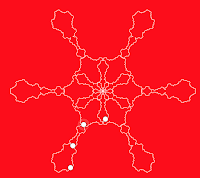
It's always nice to have a prime edition! It's in a string of 4 primes separated by 12... does that happen very often? It's also the start of a string of four sexy primes... what number separates those? It's an older sibling twin prime, and a part of a string of quadratic form primes (not sure why those are of interest). It's a lucky number by Euler's count, and it turns out those share some asymptotic properties with the primes. It's a palindrome, and a natural ambigram in some fonts... so maybe a pambidrome? I think there's one more pambidrome prime before 200, but what's the first one after 200? It's the number of partitions of 17 into an odd number of parts. 17, [1 1 1 1 1 1 1 1 1 1 1 1 1 1 1 1 1]... and 149 others.  (Image made in Polypad, which has new features to play with each month, seemingly.)

Lagrange's theorem tells us that each positive integer can be written as a sum of four squares. But some of them can not be written as the sum of less than 4 squares, and 151 is like that. What are the four squares?

Make

To get things started, maybe give Steve Phelp's fractal snowflake maker a try. If paper is your thing, try Paula Beardell Krieg's directions.

Paula also had a great post reviewing her month of making Johnson Solids. She's been doing Saturday half hour folding sessions that are the epitome of playful math making.

Jenna Laib shared a tweet thread about a quick drawing game that got kids thinking. Update: she wrote a blog post about it!

Can't have one of these without a Simon Gregg post. Here his learners are building Number Blocks, a show he's already converted me to.

Vincent Pantaloni shared a Set game (a Set set?) with just geometric symbols. I think it could be really challenging.

Just shortly before publishing, Jonathan pushed send on a post about haikus and magic from having a typewriter in his classroom. My favorite was this, which he admitted was his own! I shared that in grad school we loved numbers that could be haiku, like 32,518,460. He added two more on Twitter:

1, 2, 3, 4, 5, 6, 7, 8, 9, 10 and 11. That's enough.

2.71 8281828 45 and so on

Play, Game & Puzzle

Back from May, but spot on theme, Peter Rowlett writes about Math Play with Young Children.

Annie Forest shared a place value, low materials math game called Draw 10 that she first wrote about a few years ago.

Adrienne Burns tweets about making a math Bingo game better, for addition and representation.

Michael Minas and family share multiple games a month on YouTube. Mostly number and operations. If I had to pick one from Nov/Dec, it would be Strawberry vs Dinosaur, a sweet little numberline game (named after their counters).

Jenna Laib, who would be my nominee for blogger of the year, despite some stout competition, shared her all purpose number boxes game in May, as a part of her high leverage games collection. Mark Chubb wrote a post about how he plays it, with multiple different operations and a units of measurement context.

James Cleveland Tran tweeted an integral calculus version of one of my favorite simple but high leverage games.

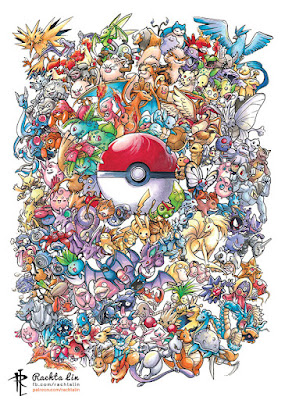
There were 151 original, or Kanto, Pokemon. (Mew is 151) I'm a big believer that strategy games of any type help develop problem solving, and sometimes number sense. Collectible card games add a lot to that, with deck construction and variety of situations adding more problem solving. 

They also raise a lot of mathematical questions, such as the one Howie Hua is solving here for Magic the Gathering. Howie's TikTok is full of amazing nuggets, strategies and math.

There was a fun Global Math Department meeting about Beast Academy Playground games, and Erick Lee shared some of his favorites. Troll hole is one I love to share on a whiteboard or paper if there's an opportunity.

Celeste Bancos revisited the Secret Number Game.

Pam's addressing that you can learn math through play in homeschool, too.

Iva Sallay crosses Sarah Carter and Joseph Nebus and makes a puzzle!

Colleen Young connects to a bunch of math puzzle resources.

Patrick Vennebush is working out a better multiple choice test in his Mathy Jokes blog.

Content

Bumba Stories has a short history of why we have 12 months.

The Quiet Pond has a review of what looks like a good picture book, Danny Chung Sums It Up

Christopher Danielson share's one perfect page from The Last Marshmallow.

Speaking of counting, Early Math Counts has some early math winter counting opportunities.

Dave Taylor started a Twitter thread about historical numerals by starting with the Cistercian numbers.

Brian Bushart shared one of his favorite resources, a free collection of math interventions, Pirate Math Equation Quest. It is not all pirate themed, but lots of great supporting materials.

One-Fifty-One is a hard rock band... not my taste, but if it's yours, rock on.

Jenna Laib had a great geometry post about the half triangle. If you listen closely, you can hear the learners progressing van Hiele levels.

If you're looking to stretch your brain, try Jim Propp's monthly essay, this time on numbers from games. Bonus John Conway stories.

Katie Steckles wrote a sweet piece for the Aperiodical about  Spirograph Math.
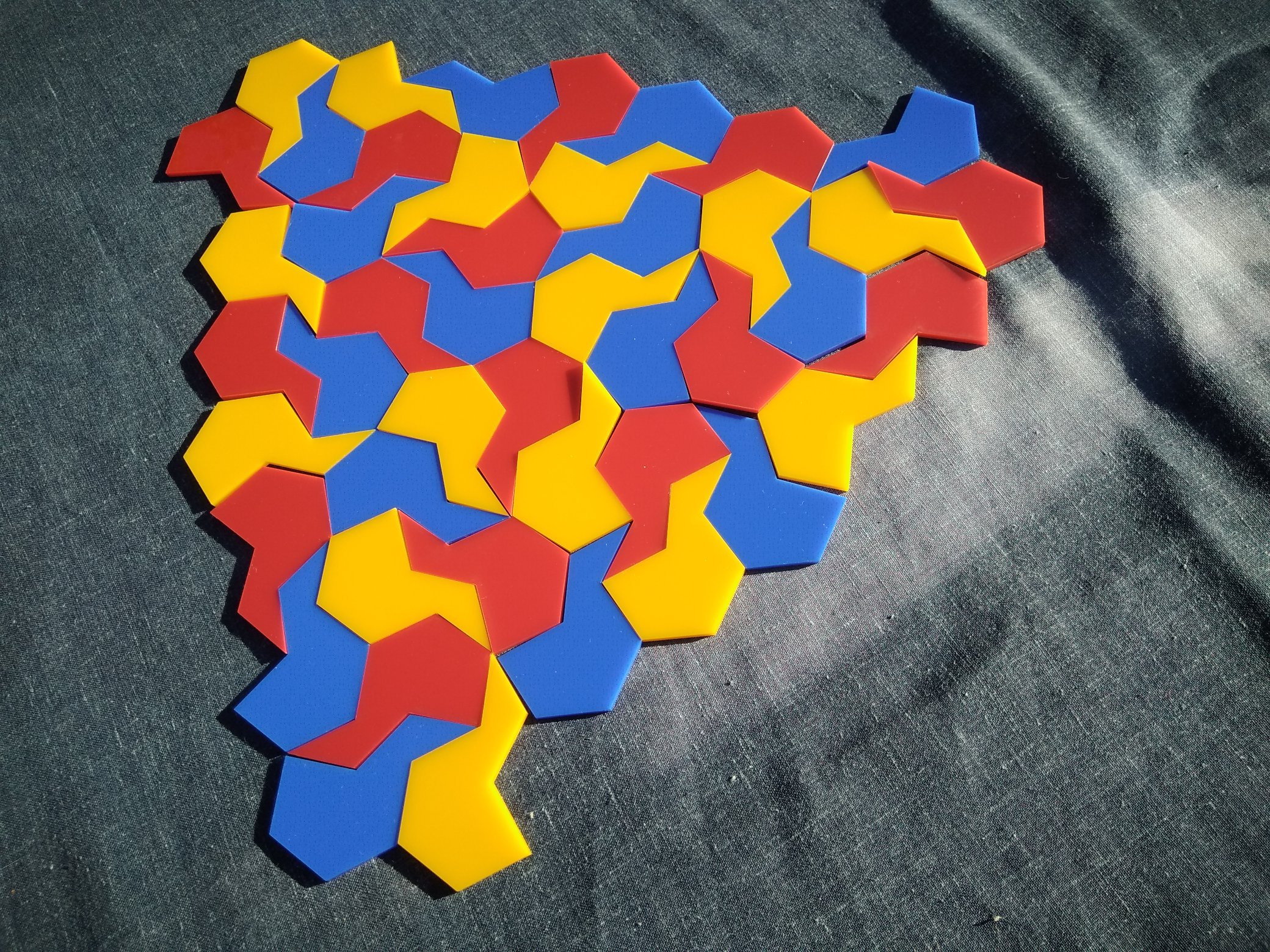
I should be blogging more... and if I did, I would definitely write about the interesting responses to this tweet about dividing polynomials with partial quotients. 


Teaching

Dylan Kane, always challenging, provocative and brief, takes on productive struggle.

David Sladkey wrote about implementing some of the Thinking Classroom ideas with his learners. Practical and productive.

Margie Pearse wrote a post for Heinemann on using literature to address social justice in math.

Dan Finkel's reflecting on a big question "Am I a Mathematician?"

In Memoriam

We'll close with Math Ed Podcast's interview of Dr. Liz Fennema, one of the founders of  Cognitively Guided Instruction. She passed away this month in hospice. She received the NCTM lifetime achievement award this year, at least partially in response to a public campaign. CGI might not be playful in the same way as many of the resources shared here, but with their focus on improving learning for children, and listening to children's inherently playful approach to mathematical problem solving, they moved all of us forward. She also did significant work on gender in math education. Rest in peace, Dr. Fennema.


If you are interested in hosting this carnival, I highly recommend giving it a try. A little work, and a lot of fun. Contact Denise on Twitter or via the Playful Math Education Carnival homepage. Denise is hosting January, but then there are lots of opportunities ahead. Ask me and I'll happily add some suggestions for posts!

Cheers to a mathy new year! I know champagne is more typical, but where's the 151 in that?


Wednesday, May 20, 2020

Playful Mathematics Carnival 138

Welcome to the Playful Mathematics Carnival 138, the edition with its choice of theme song? (Techno or punk. I vote for the Misfits, I guess.)  

I was frankly a bit surprised at how interesting 138 is. 138 is a sphenic number(the product of three distinct primes from the Greek for "wedge shaped"), but is special among the sphenics for being the smallest product of 3 primes, such that in base 10, the third prime is a concatenation of the other two: (2)(3)(23). What is the next such special sphenic? (Some of the pictures here were made with some Brent Yorgey inspired GeoGebra or David Mrugala inspired GeoGebra.


138 is the sum of four consecutive primes (29 + 31 + 37 + 41); which is the previous and the next? 138 the sum of 2 successive primes; which? And not only is 138 the average of twin primes, it is a number such that 6 times 138, is the center of twin primes, 827 and 829. Is there another number like that?

I had never heard of Ulam numbers: a(1) = 1; a(2) = 2; for n>2, a(n) = least number > a(n-1) which is a unique sum of two distinct earlier terms in exactly one way. 138 is an Ulam number... what are the two terms which make it? Which is the first counting number not an Ulam number?

Obviously, this month's edition is in the time of social distancing. So it has produced some stand out creative home mathematics. Nikky Case made an interactive explanation how the epidemiological models work. Eva Thanheiser wrote a post about numeracy in the pandemic time. Here's an applet if you're trying to model a gathering... or a classroom?

Denise Gaskins, the initiator of this here carnival here, has a post for those new to it on how to homeschool math and Peter Rowlett at the Aperiodical wrote about playful math at home

Whilst there you might check out the 2020 Lockdown Math-Off, with some really accessible entries this year. And you can submit until they run out of entries or they're allowed outside.


Lily Cole
Math Art
Evelyn Lamb collected some of my favoritest math away from school resources. Cited there, Annie Perkins' #mathartchallenge (Twitter) is maybe my favorite thing ever. Here's the home (blog) for it. Brings together so many amazing projects from so many amazing artists and mathers. Like, Paula Krieg's origami firework on Day 53. Several have compulsed me to try to make things, like the Hitomezahi stitching from Day 14. Annie's going until she hits the magical 100! 

Clarissa Grandi's #Maydala challenge has filled Twitter with lovely images.
Clarissa herself
Janet Annetts

Japleen Kaur


Miss Bowkett


Paula Krieg

More mathy math
Henri Picciotto put together two amazing posts looking at wallpaper symmetries, and a catalog of pattern block Wallpaper symmetries; part I and part II. (Challenging, I think, because the blocks themselves are so symmetric.)

Luca Moroni pointed out Raffaella Mulas' self-illustrated article on Wild Mathematics. Quick mind bending read or just ponder the pictures.

ImagePaula Krieg also pointed out this classic puzzle that Dr Olsen points out can be made from origami.

Karen Campe covers a wide variety of puzzles, from the jigsaw to the Catriona Shearer.

Simon Gregg started this thread about duck tiles, which continue to delight. He also published a sweet book on pattern blocks. If you just want the pdf, let them know and they'll donate the book to a local school.

Pat Bellew (of On This Day in Math) chases a white rabbit, running around My avorite Theorem and the arithmetic triangle. (I'm hoping that catches on over Pascal's someday.)

Justin Time
Not sure how to categorize this, ironically, but Justin Aion's post on alignment charts and teaching is amazing.


Games 
Denise Gaskins, the initiator of this here carnival here, has a War meta-post with variations from preK through HS. I use several of these in a variety of classes. 

Sam Shah collected many activities and games you can do over videochat with a class. Nia (@ihartnia) put together a Google doc of quarantine games: tinyurl.com/quarantinegamez 

Dan Finkel updated his Horseshoe Math game with a theme song!

Ben Orlin shared 6 intriguing pen and paper strategy games.


Carole Fullerton covers a silly game called Penguins. Kind of a computation bingo variant.

Kent Haines' kids are chips off the ol' block, having invented Math Ball.

My retired colleague Char Beckmann developed many math games with our students and they've all been collected here. Materials, instructions, and video demonstrations.

This past semester I got to supervise three preservice elementary teacher/math majors in their senior projects to make math games. Char Beckmann's project! Our emphasis was to make instructional games that you could play with materials on hand or with minimal printing. Sam Bosma made a fun Guess Who variant for multiplication and division, Multiply Who. Maggie Eisenga developed Choose Your Path, a hit the target game with playing cards with some very cool discrete elements. Grace Gay increased the math content in Quixx, a dice game with some subtle strategy, to make Rolie Polie Operation Olie. All are upper elementary-middle school, and have how-to-play videos.

In Memoriam 
Playful math lost two giants recently and I wanted to close with some remembrances.

John Conway was an all time great mathematician. Siobhan Roberts, his biographer, wrote two pieces for the New York Times, a memorial and a personal memoir. (Her book is excellent.) Sunil Singh said if you watch just one bit of Conway talking, watch this. James Propp is an unabashed groupie. Ivars Petersen shared a couple recollections. Pat Bellew remembered his impossible knot and Quanta covered its solution. Matt Baker remembered some of his lesser known results. I can't pick a favorite, but some of the most fun I've had with students is the rational tangle.


Don Steward was an amazingly creative and generous middle school maths teacher in England. Brilliant problem poser and visualizer and entirely low tech. Colleen Young wrote about some of her favorites. Jo Morgan wrote about her collaborations. Steven Cavadino shares an irrational triangle. Many people shared their favorite Don Steward task on Twitter. He did a sweet analysis of a Keith Richardson-Jones drawing that inspired some GeoGebra from me. Don's local paper wrote up a note on his importance to the community, and of course you should check the blog of the man himself, which he made arrangements to keep available and free.

On that somber note, we close the carnival.  Be safe, be kind! 

But on your way out... maybe check last month's Playful Math at Life Through a Mathematician’s Eyes or their recent post, 10 math movie recommendations, and look for next month's at Math Mama Writes, or check her post about Pythagorean Triples for an online math circle.  The carnival's homepage is at the site of Denise Gaskins, the initiator of this here carnival here. Contact her for your chance to host!


Thursday, December 19, 2019

Playful Math 133


Welcome to the 133rd installment of the Playful Math Carnival.

133 is the 6th octagonal number. How many carnivals until the 7th octagonal? What kind of pattern do the 6th polygonal numbers make? (Play with some figural number GeoGebra.)

133 is also semiprime - the product of two prime factors. (Which two?) What is the next semiprime number? 133 is also a Harshad (aka Niven) number, a number divisible by the sum of its digits. It's an unusual stretch where 3 of four consecutive integers are Harshad - which are the other two? There's also a new to me fact: 133 is the number of partitions of 55 into distinct odd parts, which seems equivalent to the number of symmetric Ferrers graphs with 55 nodes. I haven't made sense of this yet, though! 133 is happy in base 10, so a good number for this holiday edition.


Last fact and shout out to Megan Schmidt: 133 is a square spiral corner number! Is that connected to any of the patterns discussed above?
 Literal math playing...

  • Dave Coffey gave a presentation on Math Play with a Purpose at Global Math. He talks about redeeming Bingo, among other things.
  • Speaking of Bingo, two of the groups at this semester's Family Math Nights made actual math games out of a Bingo premise. Meg and Madison made Food Bingo, which makes it about attributes of food. Erica and Claire had Star Bingo which used better number cards and some choice to enhance the game.
  • There was one game that I liked more than the PSTs who ran it! Give Hamburger a try.
  • Probably the breakout and most original game of FMN was You Must Cross the River. Eddie and Climie brought this D&D style game.
  • One of my HS preservice teachers tried to gamify Which One Doesn't Belong... I think Danielle is on to something.
  • Denise Gaskins, the founder of this here blog carnival, shares one of her many Hundred Chart Games.
  • Marilyn Burns shares her two dice sum game, which is a classic for a reason. She shares using it in 2nd and 7th grade!
  • Kent Haines assembled a Holiday Gift Guide for math games that might be too late for shopping this holiday from this post, but you'll want to keep this list.

The 133rd Space Shuttle mission 
was the last (39th) for Discovery. 
They installed the Leonardo Module 
to the International Space Station.

Some playful interactives...

  • NRICH shared a puzzle that is part about area, but made challenging through Cuisenaire Rods. Great lesson.
  • Kevin Forster shared Factris which is a multiplication/factoring version of Tetris. 
  • Scott Farrar made a cool GeoGebra activity implementing Always/Sometimes/Never with quadrilaterals. 

 The C-133 Cargo plane over San Francisco Bay.

Math stories...


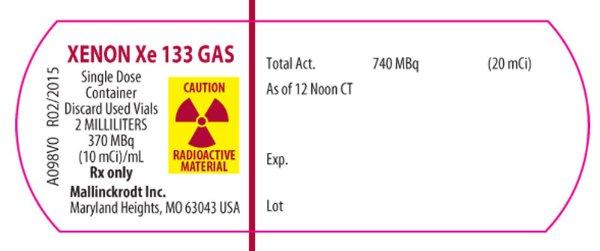
Xenon 133 is an isotope 
that is inhaled to study respiration, 
among other medical imaging uses.

Math art to round us out...

  • Isohedral rounded up some of my favorite animated math artists in this post.
  • Very excited that Clarissa Grandi has a math art activity book coming out.  Look at her website and you'll see why I'm excited.
  • Nathaniel Highstein did an Islamic Geometry project with his students. Scroll down this thread to see their work and how he tiled them!
  • Paula Beardell Krieg has been killing it, but if I was picking one recent post it's this one about the gyrobifastigium. You heard me.
  • Simon Gregg tweeted some mathart that turned into WODB and latin squares and more, as only Simon can do. But what better captures the spirit of Playful Math?

Math art from the Public Domain Review.

The previous Playful Math was at Arithmophobia No More and the next is at Math Misery?. Would you like to host? Contact Denise Gaskins, or see the Playful Math homepage. People don't submit a ton of posts anymore, but I enjoy looking back at what I've found helpful from the math ed community and sharing it all together. So many resources and so much fun to be had.

Happy Holidays, or New Decade Blessings, or Sweet Playful Math!